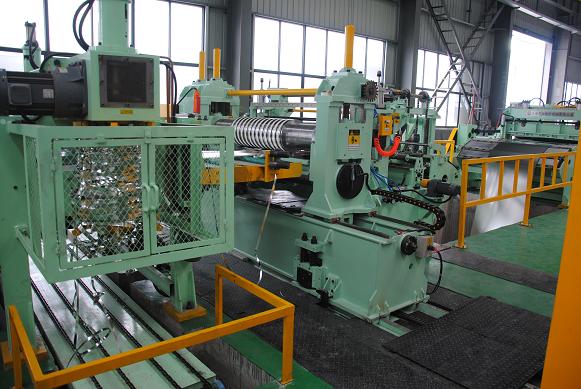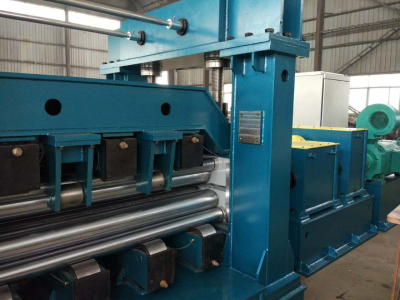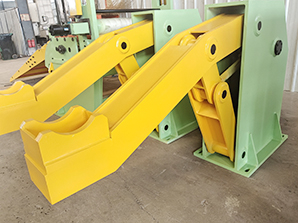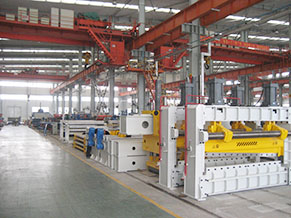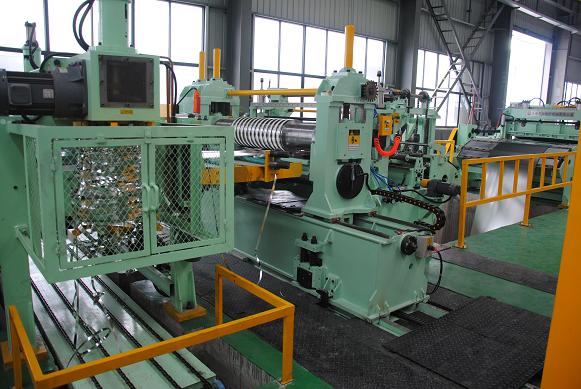
Slitting and winding line
High production capacity and stable operation: fully automated tension control, servo drive, and real-time monitoring, increasing output per unit time and reducing downtime.
Precise slitting and high-quality coils: advanced tension and alignment systems, ensuring cutting width tolerance, edge quality, and coil concentricity stability.
Low scrap rate and high material utilization: high-precision cutting and edge trimming, reducing edge waste and improving material utilization.
Fast line changeover and strong flexibility: quick tool and die changes, adaptable to different widths, thicknesses, and materials, shortening delivery lead times.
Comprehensive automation and intelligence: online tension, speed synchronization, fault self-diagnosis, production data traceability, reducing manual intervention.
Reliability and easy maintenance: durable key drive components, compact structure, easy maintenance, short fault response times.
Safety and standards compliance: multiple protections and interlock alarms, compliant with industry safety standards.
Low energy consumption and cost advantages: efficient power transmission, energy-saving design, reducing operating costs.
Wide material and process adaptability: suitable for various metal strip materials (steel, aluminum, galvanized, etc.), with broad width and thickness ranges.
Consistency of coil quality and compatibility with downstream processes: stable coil diameter and tension, facilitating coating, plating, and secondary processing.
Strong integration capability with upstream and downstream equipment: easily linked with coating, slitting, winding equipment to form an efficient production line.
Product positioning and application
A continuous production line for slitting and rewinding metal coils such as steel, aluminum, galvanized steel, etc., after longitudinal/slitting in width. Suitable for mid-to-high production requirements and subsequent surface treatment processing steps.
Main process capabilities
High-precision slitting: stable slit width tolerances and excellent edge quality to ensure downstream process continuity.
Rewinding and tension control: closed-loop tension control to ensure coil concentricity and winding quality consistency.
Edge waste processing: edge trimming and recycling to reduce material waste.
Structure and key components
Feed and guiding system: high-rigidity guiding roller group to minimize drift.
Slitting unit: knife clamping, blade pressure, alignment devices with fast knife change capability.
Tension system: independent control of front, back, and mid tension; servo drive and tension sensors enable closed-loop control.
Rewinding unit: winding rolls, tension control mechanism, guide bars and drum assembly to ensure stable roll diameter.
Edge trimming and processing: edge trimming and re-cutting or recycling modules.
Automatic line changeover unit (optional): rapid tool/die/guide-roller changes to shorten line-change time.
Control and electrical: control cabinet, HMI touch panel, fieldbus communications, data acquisition and diagnostics.
Main technical parameters (ranges; actual values depend on model)
Coil width range: approximately 200–1250 mm (can extend to 200–2000 mm, depending on model)
Thickness range: 0.15–3.0 mm (varies by material)
Coil diameter range: 500–1800 mm
Maximum line speed: 20–600 m/min, depending on material and thickness
Tension control: closed-loop servo drive, tension sensor array and adaptive tension algorithm
Edge waste handling capability: automatic edge trimming and recycling within design scope
Changeover time: in the 5–30 minute range (fast-changeover option available)
Main drive and power: servo motor + variable-frequency drive; standard power supply 380V/50Hz three-phase or customized to site power
Precision and stability: key-component positioning accuracy typically ±0.05 mm; overall line stability better than industry average
Dimensions and weight: machine length, width, and weight vary with configuration; confirmed according to on-site space and load capacity
Automation and control system
PLC/servo control, seamless integration with fieldbus and drives
Intuitive HMI, process data recording, trend analysis and alarm management
Remote diagnostics, data export, and interfaces with ERP/MIS systems
Safety and compliance
Full protective guards, emergency stop devices, interlock alarms and locking mechanisms
Compliance with relevant industry safety standards and regional regulations (e.g., CE/UL options, market-dependent)
Operation, maintenance and after-sales
Design emphasizes ease of maintenance; easy replacement and servicing of knives and drive components
Includes equipment commissioning, operator training, spare parts support and on-site/remote technical assistance
Applications and integration
Can be integrated with coating, plating, slitting and secondary processing equipment to form an efficient production line
Supports rapid switching of different material combinations and process optimization
Optional configurations and customization
Online edge waste recovery and edge trimming/recycling units
Online coating/plating interfaces, automatic cleaning and lubrication systems
Advanced data analytics and production optimization software, cloud-based diagnostics
If you provide specific materials, widths, thicknesses, capacity requirements and on-site space, I can offer more tailored parameter ranges and a configuration list to meet your process needs.