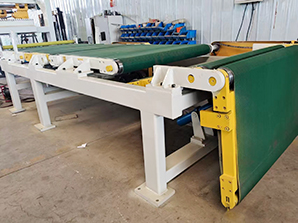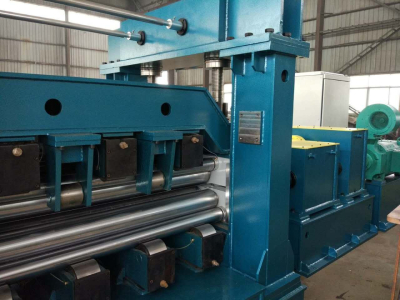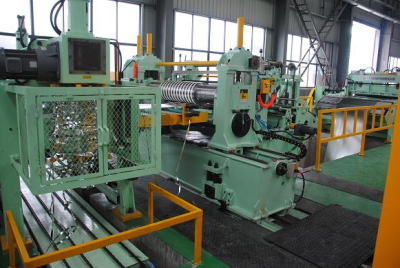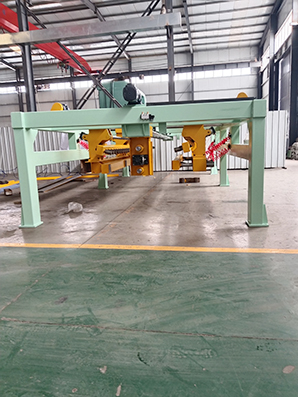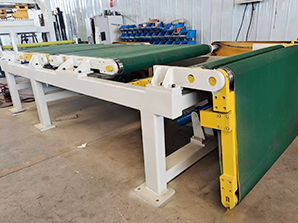
conveyor belt
Suitable for high-throughput, long-distance continuous conveying with high efficiency.
Simple structure and low maintenance costs: no complex mechanical drive components, easy daily maintenance.
High energy efficiency and low unit transport cost: relatively low drive losses, lower long-term operating costs.
Wide applicability and strong material versatility: capable of handling various materials, including metal sheets, and suited to a range of environments.
Flexible layout and strong configurability: belt path, incline, lift height, and width can be customized to site requirements.
Easy to automate: interfaces easily with warehousing, sorting, and yard systems, enabling automation/intelligentization.
Stable operation and high reliability: simple structure, low fault rate, suitable for continuous operation.
Safety and durability: options for dust-proof, corrosion-resistant, explosion-proof, etc., enhancing on-site safety.
Easy maintenance and broad spare-parts compatibility: common materials and components are easy to procure, minimizing downtime.
Low noise and low vibration: relatively quiet with minimal vibration, suitable for environments with strict requirements.
Cost-controllable and scalable: initial investment is controllable, with favorable costs for future expansion and upgrades.
1. Equipment Overview
The belt conveyor is a continuous conveying equipment which uses the conveyor belt as the bearing and traction component. It is driven by the friction between rollers and the belt, and applied to the horizontal or inclined conveying of metal plates.
2. Core Structure
- Conveyor Belt: For bearing and traction functions. Materials include rubber, PVC, PU, silica gel and more; special types with wear-resistant, heat-resistant, oil-resistant and food-grade properties are optional.
- Driving Device: Composed of motor, reducer and drive roller to provide power, divided into electric drum drive and reducer drive two types.
- Idler: Supports the belt and reduces operating resistance, including trough idler, flat idler, buffer idler and self-aligning idler.
- Roller: Drive roller for power transmission; bend roller for direction changing and wrap angle increasing.
- Tensioning Device: Screw type, heavy weight type and hydraulic type, ensuring belt tension and preventing belt slipping.
- Telescopic Belt Conveyor: With adjustable length, suitable for truck loading & unloading, warehouse sorting applications.
- Movable Belt Conveyor: Equipped with casters for flexible movement, ideal for temporary conveying in construction sites and farms.
3. Working Principle
The driving device rotates the drive roller, which pulls the conveyor belt to operate circularly through friction. Materials are fed from the head or tail of the equipment, and discharged at the other end along with the running belt, realizing continuous material conveying.
4. Conventional Technical Parameters
- Belt Width: 400/500/650/800/1000/1200/1400/1600/1800/2000mm
- Belt Speed: 0.8–4.0m/s (commonly adopted: 1.2–2.5m/s)
- Conveying Capacity: 5–1000t/h (determined by belt width, belt speed and material density)
- Conveying Distance: Single machine reaches hundreds of meters; multiple units can be connected in series for long-distance transportation.
5. Performance Advantages
- ✅ Large conveying capacity: The hourly output can reach thousands of tons with high working efficiency.
- ✅ Simple and reliable structure: Standardized components, easy maintenance and low operating cost.
- ✅ Stable and low-noise operation: Continuous conveying with no impact and low running noise.
- ✅ Strong adaptability: Available for horizontal, inclined and turning arrangement, applicable both indoors and outdoors.
- ✅ Low energy consumption: Friction driving mode saves unit energy consumption, energy-saving and eco-friendly.
- ✅ Automatic compatibility: Can be equipped with frequency conversion speed regulation, PLC control and intelligent monitoring system.
6. Application Industries
- Metal plate processing production lines
- Chemical and metallurgical industry: Conveying of chemical raw materials, metal powder, slag and other materials
- Food and pharmaceutical industry: Conveying of grain, candies, medicines and packaged products (adopting food-grade conveyor belt)
- Logistics and warehousing industry: Cartons, parcels, sorting lines and loading & unloading conveying
- Electronics and light industry: Electronic components, assembly lines and packaging lines conveying。