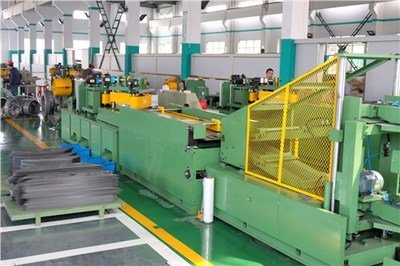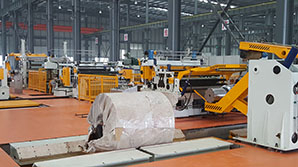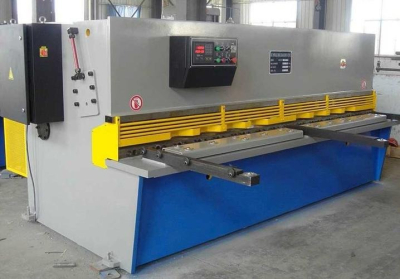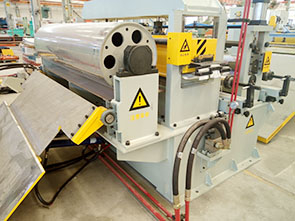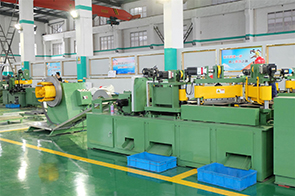
horizontal cutting line
Advantages of the Horizontal Shearing Line for Metal Coils
High-precision slitting with strong dimensional consistency
Equipped with a stable positioning and measurement control system to improve finished length/width accuracy, ensure batch-to-batch consistency, and reduce downstream rework and scrap.Superior cutting quality with smooth, even edges
By optimizing the blade structure and controlling the blade gap, the risk of burrs, tearing, and deformation is reduced, making the cut edge smoother and well-suited for welding, bending, and surface treatment.Wide application range for different metal coil materials
Covers multiple materials such as cold-rolled steel, galvanized steel, and stainless steel, as well as various thickness ranges—enabling stable production from small runs to large-scale output.High efficiency and fast cycle time for mass production
Compact line layout and stable transmission, combined with automated coil loading and slitting processes, enhance overall throughput and reduce unit processing cost.Stable and reliable operation with low downtime
Durable and proven key components, along with well-designed lubrication and protection features, minimize fault frequency and support long-term continuous production.High automation level to reduce labor and operator errors
Supports preset parameters, interlocked control, and fault alarms, reducing manual intervention and improving production consistency and workplace safety.Safe, reliable system with user-friendly operation and maintenance
Features safety guards, interlocks, and emergency stop functions; the HMI is clear and convenient for commissioning and daily maintenance.Improves downstream first-pass yield and benefits subsequent processes
With stable dimensions and good edge conditions after shearing, it facilitates downstream operations such as stamping, bending, welding, and coating, reducing defects and improving overall yield.
1) Equipment Application
The horizontal slitting line is used to horizontally slit / cut-to-length metal coils, processing the coil into sheets/strips that meet the requirements of downstream processes such as stamping, bending, welding, and coating. It enables high-efficiency batch production with controllable precision.
2) Main Structure and Functional Modules
Uncoiling & Tension Control System
Uses an uncoiling unit together with a tension adjustment mechanism to keep the coil feed stable, reducing wrinkling and stretching deformation.Feeding & Leveling/Guiding Components (optional by configuration)
Improves sheet flatness through guiding and straightening systems, ensuring even loading during the horizontal shearing process.Horizontal Shearing / Slitting Actuating Unit
Blade assemblies and gap control achieve high-quality cutting, reducing burrs, tearing, and edge defects.Measuring & Cut-to-Length Control System
Combines an encoder / length-measuring device and control algorithms to ensure accurate cut length, good repeatability, and batch-to-batch consistency.Receiving & Stacking / Conveying System (optional by configuration)
Optional conveyor rollers, receiving tables, stacking units, or automatic unloading solutions facilitate seamless connection to subsequent production lines.Electrical Control System (PLC + HMI)
Supports parameter presetting, interlocked control, fault alarms, and production logging—convenient for commissioning and traceability.
3) Applicable Materials and Specifications
Materials: Cold-rolled steel, galvanized steel, stainless steel, and other metal coil materials
Thickness: 0.3–3.0 mm
Coil Width: 600–1600 mm
Cut-to-Length: for example, 200–2500 mm
4) Key Process Features
Precise Cut-to-Length Control: Stable length/width accuracy and strong batch consistency
Controllable Edge Quality: Improves edge flatness through blade-structure optimization and gap management
Stable Feeding & Tension Management: Reduces deformation and deviation during coil processing
Automated Line Integration: Minimizes manual intervention and improves line cycle time and first-pass yield
5) Line Advantages
Improves First-Time Formation Rate in Downstream Processes
Reduces Rework Risk Caused by Burrs and Edge Defects
Supports Stable Continuous Production to Meet Large Batch Orders
User-friendly HMI and easy maintenance for quick specification changes
6) Optional Configurations
Automatic blade change / automatic blade gap compensation
Online inspection (dimension / edge quality / counting)
Integration with upstream/downstream line equipment (leveling machine, stamping line, pretreatment before coating, etc.)