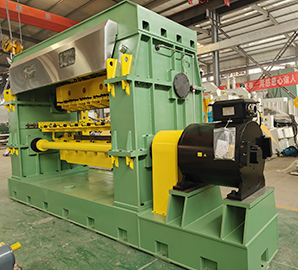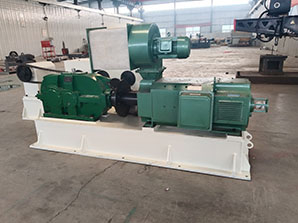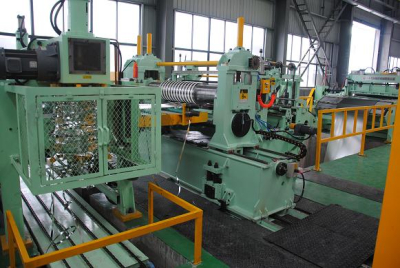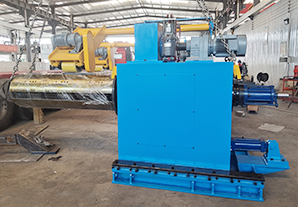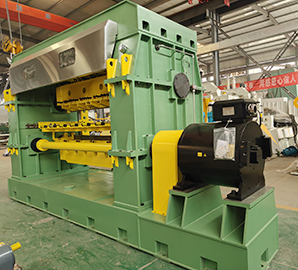
flying shear machine
High-speed in-line cutting to boost line throughput
Cutting while the coil is continuously fed, significantly increasing line speed and output, and reducing downtime.
Stable, high-quality edge and shear quality
Precision tooling, synchronized servo system, and knife-position control ensure clean edges with minimal burrs, good repeatability, and reduced secondary processing.
Broad material and thickness adaptability
Compatible with cold-rolled/hot-rolled steel, coated aluminum/stainless steel, copper, and other metal coils; covers a wide thickness range from thin sheets to medium-thick coils, enabling rapid line changes.
Flexible processing and line-change capability
Quickly adjust cut length, width, and tension parameters to shorten changeover time and accommodate multi-variety small-batch production.
Seamless integration with upstream and downstream equipment
Easily linked with rolling mills, coilers, straighteners, transfer lines, etc., to form a smarter full-line automation solution.
Automation and intelligent features
Integrated PLC/servo control, tool wear monitoring, online thickness/width detection, fault diagnosis, remote diagnostics, and data collection.
Safety and user-friendly HMI
Comprehensive safety guarding, emergency stop, and interlocks, with an intuitive operator interface to reduce risk.
Low maintenance cost and long blade life
Modular design, easily replaceable blades, and serviceable components to minimize downtime and maintenance costs.
Reduced material waste and scrap rate
Precise cutting and robust shear force control minimize edge loss and secondary processing, improving material utilization.
Energy and operating cost optimization
Efficient drive and energy optimization design lower daily operating costs and improve overall ROI.
Product Positioning
Application scenario: In-line cutting of metal coil material, enabling rapid cutting while the coil is continuously fed to increase line speed and output and reduce downtime.
Target customers: Steel mills, aluminum and copper processing facilities, including rolling mills, coil processing plants, and thin sheet processing plants.
Core Characteristics
High-speed in-line cutting, significantly boosting line throughput
Stable, high-quality edges and cutting quality
Broad material and thickness adaptability
Flexible processing and rapid changeover capability
Seamless integration with upstream and downstream equipment
Automation and intelligent control
Safety and user-friendly human–machine interface
Low maintenance cost and long blade life
Reduced material waste and scrap rate
Digitization and remote diagnostic capability
Technical Parameters and Capabilities (typical ranges; actual values depend on the specific model)
Applicable materials: Cold-rolled/hot-rolled steel, coated aluminum/stainless steel, copper and other metal coils
Coil width range: approximately 500–1800 mm (expandable depending on model)
Thickness range (standard version): approximately 0.3–4.0 mm; some models cover 0.2–6.0 mm or thicker
Coil surface quality requirements: suitable for standard pickled/phosphated surfaces; special adaptations for high-gloss surfaces
Max line speed / shear speed: materials- and model-dependent; typically mid-to-high speed range; some high-end models achieve higher speeds
Cut length and width tolerances: programmable according to process requirements
Tension control range: supports varying thickness and material tension needs; closed-loop tension control
Power consumption and drive: efficient servo drive with energy-optimization options
Control system: PLC/servo control, blade wear monitoring, online thickness/width detection, fault diagnosis, remote diagnostics, data collection
Safety protection: fully enclosed guarding, emergency stop, interlocks, safety light curtains or fences, protected operator zones
Structure and Key Components
Conveying and tension system: coil guidance, tension control, surface-protection components to ensure coil stability during cutting
Shearing mechanism: blade assembly, blade position control, blade holder and alignment device to ensure clean edges with minimal burrs
Positioning and cutting control: high-precision servo drive, blade position sensing, synchronized control for repeatability
Clamping and support system: pneumatic/hydraulic clamping with adjustable clamping force to prevent coil rebound
Safety and maintenance design: modular, easy-to-maintain layout, rapid blade-change pathways, lubrication and dust-protection features
Control and human-machine interface: touchscreen or industrial display, user-friendly UI, on-site parameter visualization
Control System and Automation Options
Standard configuration: PLC + servo drive, blade position detection, basic HMI
Advanced configuration: online thickness/width detection, blade wear monitoring, remote diagnostics, data collection with cloud/local analytics
Integration capability with upstream/downstream equipment: can link with rolling mills, coilers, straighteners, transfer lines to enable full-line automation
Operations and maintenance support: remote diagnostics, remote upgrades, spare-parts management, on-site training
Installation, Commissioning and After-Sales
Installation and commissioning: pre-shipment installation checklist, on-site wiring, initial commissioning and parameter optimization
Training and support: operator training, maintenance training, troubleshooting common issues
Spare parts and maintenance service: blades, seals, drive components and other standard parts; warranty and maintenance schedule recommendations
Data services: fault-diagnosis records, run-time data analysis, optimization recommendations
Customization and Selection Guidance
Standard version: high-speed inline cutting for conventional materials and thicknesses, cost-effective
High-end version: extended blade life, online detection, remote diagnostics, broader material and thickness range
Custom version: tailored to specific materials, extreme thicknesses, very high line-speed requirements, or strict automation integration
Selection considerations: please provide target materials, thickness range, coil width, desired line speed, whether full-line integration is needed, and regional safety and certification requirements
Common Model Comparison Points
Model A (Standard): suitable for standard materials, thickness range, and line speed
Model B (Mid-range): adds online detection, remote diagnostics, and broader thickness range
Model C (High-end): very high line speed, full automation integration, comprehensive energy optimization
Value-Added Services
Hardware upgrade/replacement programs
Software version upgrades and data analytics services
Remote operations and periodic health checks
On-site customized training
If you’d like, I can tailor this into a bilingual product page, specification sheet, or quotation template based on your actual parameters (materials, thickness range, coil width, target line speed, whether full-line automation is required, and regional safety/certification requirements).