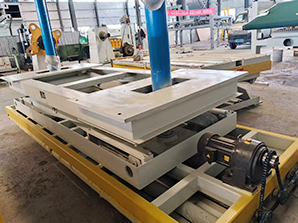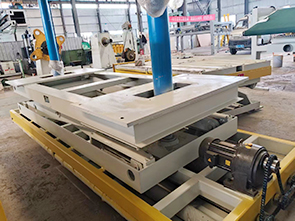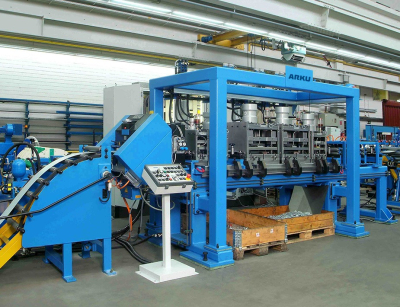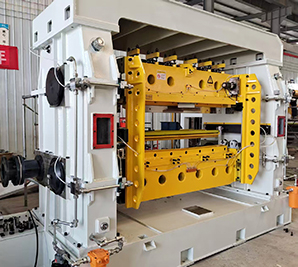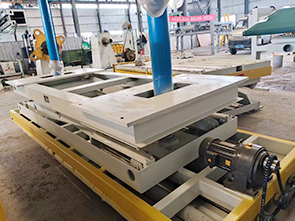
lifting platform cart
Core advantages
Improve safety and protect operators
Design features such as fall protection, load protection, emergency stop, and anti-pinch protection to reduce injury risk.
Edge protection, platform anti-slip surface, and wear-resistant finish to minimize scratches and slips during sheet handling.
Significantly boost processing-line efficiency
Fast, precise height adjustment; sheets can align with press, cutting, and bending surfaces, shortening handling and travel time.
Compatible with multiple station docking heights to improve first-time loading/unloading success.
High load-bearing capacity and durability
Steel frame, high-load platform, and wear-resistant coating designed for thick and large sheets, ensuring long-term stable operation.
Multiple drive options (electric, manual, hybrid) to accommodate different sheet weight ranges.
Excellent positioning accuracy and repeatability
Precise height control and stable horizontal positioning to ensure accurate docking and alignment across multiple processes.
Adaptability to metal-working environments
Designed for cutting oil, coolant, and metal chips; easy to clean and corrosion-resistant.
Compact structure with a small footprint, enabling insertion into crowded processing lines.
Outstanding system integration and expandability
Easy interfacing with conveyors, robot pick-and-place systems, automatic magazines, and CNC equipment for automated coordination.
Supports remote monitoring, maintenance diagnostics, and PLC/robot interfaces for better line control.
Overall cost advantages
Reduces labor and operation time; lowers worker compensation and downtime costs.
Long service life and easy maintenance, lowering long-term maintenance costs.
Flexible selection and configuration
Customizable platform dimensions, stroke, load, wheel types, and protection levels to fit different sheet thicknesses, widths, and weights.
Optional edge protection, anti-slip strips, clamping accessories, edge supports, etc., enhancing compatibility with various sheet shapes.
Product Overview
Product name: Metal Sheet Processing Line Lift Table Cart
Applicable industries: Material loading/unloading and workpiece alignment on metal processing lines such as stamping, laser cutting, plasma cutting, bending, and spot welding
Core selling points: High load capacity, precise positioning, integrated control, good environmental tolerance, and seamless interfacing with other equipment
Main Technical Specifications (customizable ranges; actual model may vary)
Load capacity (maximum load): 1,000–10,000 kg (customizable based on sheet thickness and size)
Stroke height / lifting range: 600–2,000 mm (customizable per workstation height)
Lifting speed: 2–10 mm/s (accelerate/decelerate curves可 configured per process requirements)
Platform positioning accuracy: ±1–5 mm (typical; extreme precision up to ±0.5 mm achievable)
Drive options: Electric servo, hydraulic drive, hybrid drive (optional)
Power requirements: Single-phase / three-phase AC, commonly 220V/380V, 50/60 Hz; industrial DC drive available on request
Control system: Local HMI/touchscreen + PLC control, supports remote diagnostics and data collection
Safety features: Overload protection, emergency stop, anti-pinch protection, edge protection, platform anti-slip, anti-tip design
Materials & surface: Steel frame, wear-resistant coating / powder coating, anti-corrosion treatment, edge protection
Wheel types & mobility: Front-back / caster wheel combination with locking; optional track guidance or track-guided rollers
Standard interfaces & integration: Can interface with conveyors, robot pick-and-place systems, automatic magazines, CNC equipment; supports Ethernet/IP, Profinet, Modbus, OPC UA, etc.
Structure & Materials
Frame & platform: Steel structure; platform surface uses wear-resistant, scratch-resistant material; edges with protective strips or edge supports to protect sheets
Surface treatment: Wear coatings / powder coating on platform and critical load-bearing parts to reduce corrosion and wear
Drive options: Electric servo (high-precision positioning), hydraulic (stable lift for high loads), hybrid (cost-performance balance)
Control system: PLC + HMI for button/touch operation; programmable travel, speed, acceleration/deceleration
Integration capability: Coordinatable with process-line robot material handling, conveyors, automatic magazines, and material box systems
Safety & compliance: CE, UL compliant; optional IP rating and enhanced protection levels
Use & maintenance: Easy-to-clean design, modular structure for routine maintenance and replacement of key components
Optional configurations (customizable)
Platform & accessories: Edge protection, edge supports, clamping attachments, suction rack, fixture interfaces; optional track-guiding or guiding wheel systems for added stability
Interfaces & automation: Interfaces for robot grippers, feeding robots, AGVs; CNC equipment interfacing (e.g., with presses, bending machines)
Monitoring & diagnostics: Remote monitoring, cloud diagnostics, maintenance reminders, data logging & analysis
Surface & environment: Oil-resistant, high-temperature resistant, coolant-resistant coatings and materials
Power & control: Different voltage/frequency options, redundant power supply, emergency backup power
Others: Custom quick-load/unload mechanisms, standardized fixture interfaces, rapid loading/unloading solutions
Applications
Metal sheet loading and alignment: Lift sheets from pallets/shelves to processing table height for quick alignment and processing
Transfer around stamping/laser/shearing lines: Precise height and horizontal positioning to reduce secondary handling
Equipment maintenance and mould/tooling changes: Lift large fixtures/tools to service positions to reduce bending and lifting load
Purchasing & Delivery Considerations
Key information to provide: maximum load, sheet thickness and size range, specific workstation height on the processing line, existing interfaces/robot models, desired lift speed and accuracy, working environment (oil, coolant, etc.)
Delivery format: Turnkey unit; on-site installation, commissioning, training, and after-sales service plan
Warranty & after-sales: Standard warranty period, maintenance frequency, spare parts list
If you have specific parameters (e.g., maximum load, sheet thickness range, line workstation heights, interface requirements, budget), I can tailor a detailed model recommendation, bill of materials, and a rough quotation framework.