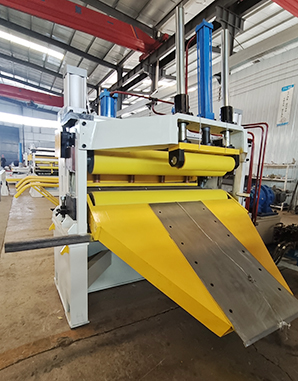
Levelling transmission
High-precision leveling and excellent repeatability
Provides stable planar and level positioning, maintaining high repeatability over time and reducing process variation.
Rapid leveling and automation capability
Supports fast setup and automatic leveling control, shortening leveling time and improving machine uptime and production line availability.
Superior rigidity and stability
Uses a high-rigidity structure and high-quality drive components to minimize the impact of thermal deformation and vibration on flatness.
Strong load adaptability
Maintains flatness under medium-to-large loads, suitable for heavy-duty worktables, conveyor systems, and similar scenarios.
Self-diagnostics and easy maintenance
Built-in sensors and self-diagnostic capabilities, with early warnings to reduce the risk of unexpected failures and facilitate maintenance planning.
Long life, low maintenance costs
Optimized lubrication and sealing design to reduce wear and lower maintenance frequency and costs.
Low energy consumption and quiet operation
Efficient drive and precision transmission enable low power consumption and low-noise operation, improving the working environment.
Easy integration and flexible scalability
Modular design and standardized interfaces, enabling seamless integration with existing control systems, sensors, and platforms, and easy expansion.
Safety and reliability
Equipped with safety features such as limits and fault protection to ensure reliable operation.
Broad applicability
Suitable for CNC machines, leveling/work tables, optical/measurement platforms, printing and electronics assembly, and other applications requiring high flatness.
Product Positioning and Applications
Product Positioning
Integrate conveying with automatic leveling/level positioning in a single system to ensure flatness and levelness of workpieces during conveyance, improving stability and yield in downstream processing and assembly.
Key Application Scenarios
Front/edge processing and post-processing for CNC machines, leveling worktables, optical/measurement platforms, printing and electronics assembly lines, heavy-load convey systems, and other scenarios requiring high flatness and synchronized conveying.
Core Selling Points
High-precision leveling and repeatability
Rapid leveling and automated control
Superior rigidity and long-term stability
Strong load adaptability
Self-diagnostics and ease of maintenance
Long service life with low maintenance costs
Low energy consumption and quiet operation
Easy integration with modular expansion
Safety and reliability
Broad applicability and customization options
Technical Specifications (sample fields; fill actual values for specific models)
Flatness/level positioning accuracy: ±0.01 to ±0.05 mm/m (model-dependent)
Flatness repeatability: ±0.005 mm (actual test data applies)
Maximum load: 50–2000 kg (tiered by model)
Conveying speed: 0.1–1.0 m/s (customizable)
Leveling method: automatic leveling with closed-loop sensor feedback
Drive method: servo motors with ball screws or linear motors; brushless direct drive optional
Control system: PLC/IPC + fieldbus; options include EtherCAT/Profinet/Modbus
Power and consumption: input 220–240 VAC, 50/60 Hz (or customer needs 380 VAC, etc.)
Dimensions and weight: platform size (X×Y), thickness, total weight
Environmental conditions: operating temperature -10 to 50 °C, humidity range, IP54/IP65 (depending on enclosure)
Safety features: emergency stop, limit switches, anomaly alarms, anti-collision design
Surface and materials: platform surface treatment, materials (aluminum alloy/stainless steel, etc.)
Structure and Components
Main frame: rigid frame with deformation-resistant design
Platform/worktable: level platform with feedback surface from leveling sensors
Transmission and drive unit: high-precision servo motor, ball screw or linear motor, clamping/positioning mechanisms
Sensing system: leveling/flatness sensors, position/attitude sensors, load monitoring
Control box and electricals: embedded controller, fieldbus interfaces, human-machine interface (HMI)
Accessories: guide rails, sliders, dust covers, fixtures, lubrication and sealing systems
Control System and Interfaces
Control method: closed-loop servo control, enabling real-time leveling and synchronized conveying
Communication interfaces: Ethernet, EtherCAT, Profinet, Modbus and other fieldbus options
HMI/Programming: user-friendly HMI, supports parameter setting, diagnostics, data logging
Integration with other equipment: easy to connect with existing PLCs, robots, measurement/inspection systems, and supervisory software
Installation, Commissioning, and Maintenance
Installation: factory pre-assembly plus on-site rapid installation; includes installation manual and commissioning checklist
Commissioning: factory test data, leveling accuracy verification, performance tests for load and speed
Maintenance: self-diagnostic alarms, maintenance-friendly lubrication and sealing design, periodic maintenance recommendations
Spare parts and after-sales: standard parts list, rapid replacement strategy, warranty terms