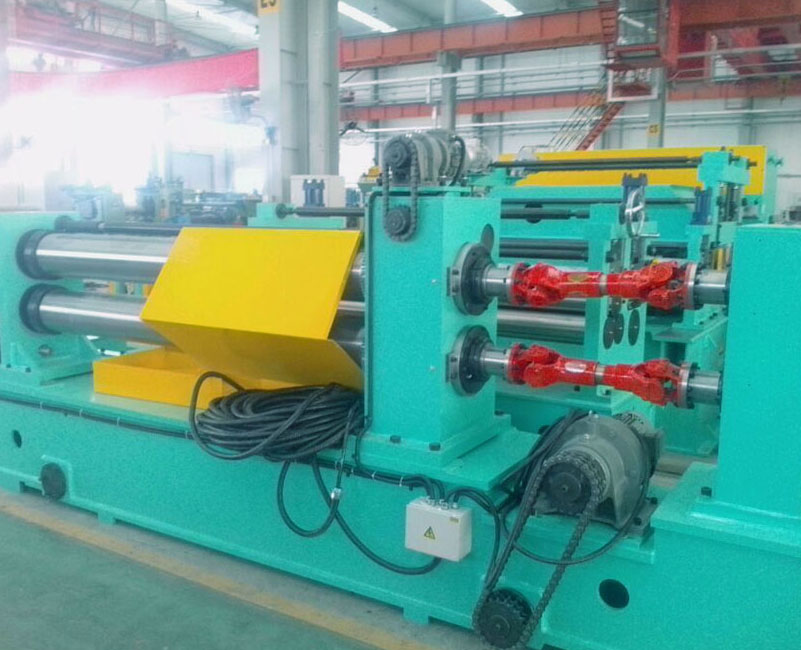
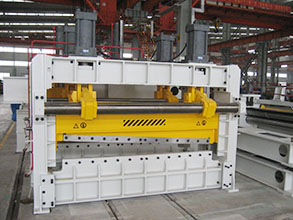
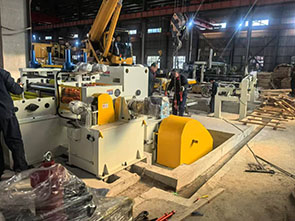
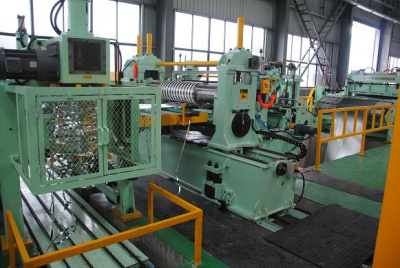
longitudinal slitting machine
Main Functions of a Slitting Machine (Longitudinal Slitting Machine)
Longitudinal slitting: Cuts coil material (such as steel strip, aluminum strip, copper strip, thin film, etc.) along its length into strips of specified widths.
Recoiling / rewinding: After cutting, the material can be wound into multiple finished coils as required (or fed directly into downstream processes).
Accurate and clean edge processing: Removes irregular edges and burrs to improve both subsequent processing and finished appearance.
Improved material utilization: Optimizes width and supports multi-size slitting to reduce waste and increase yield.
Suitable for multiple processing needs: Produces strip materials meeting specifications for stamping, drawing, coating, lamination/adhesive film application, foil processing, and more.
Product Advantages
High-precision control: Uses accurate feeding and slitting positioning for excellent width consistency and good edge straightness.
Stable slitting quality: Optimized cutter/slitting structure ensures neat cuts with fewer burrs, reducing the cost of deburring in later steps.
High-speed production capability: Designed for continuous batch production with stable cycle time and high efficiency.
High degree of automation: Supports parameter setting, automatic tension control, automatic guiding/alignment and feeding, as well as fault protection functions (depending on configuration).
Safe and reliable operation: Includes safety interlocks, emergency stop, overload protection, and other features to reduce operational risk.
Wide application range: Adjustable to different materials, thicknesses, coil diameters, and slitting width/strip numbers (depending on the machine model).
Easy maintenance and quick changeover: Machine design enables easy blade adjustment, roller replacement, and faster line change, minimizing downtime.
Better finished appearance: Reasonable winding tension control results in coils with uniform tightness, reducing strip wrinkling and running-off.