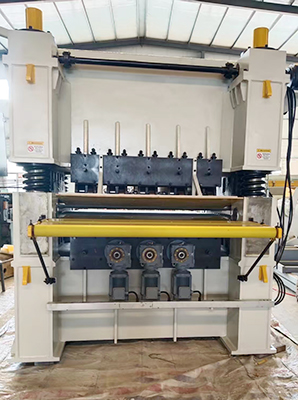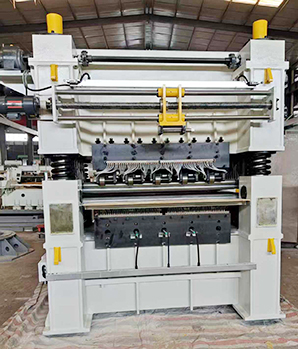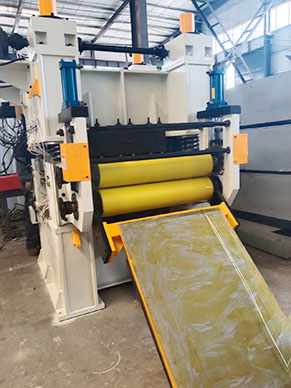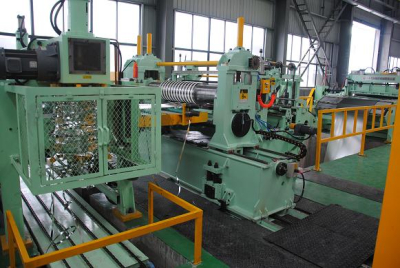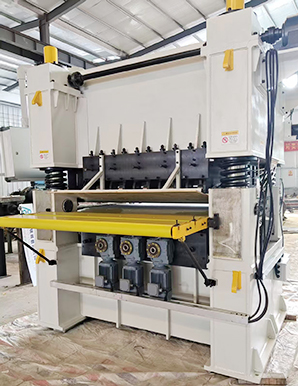
leveling machine
Product Advantages of the Leveling Machine
High Leveling Precision
With a rational roller arrangement and tension control system, it ensures stable flatness for sheet/strip materials, reducing waviness and bending.Wide Application Range
Suitable for processing various material types (e.g., steel plates, steel strips) and different thicknesses and widths, enabling fast setup and high changeover efficiency.Strong Stability, Smooth Operation
Key components are made with high-strength materials and precision machining processes to reduce vibration and deviations, improving continuous production capability.Long Roller Life & Easy Maintenance
Wear-resistant roller surface design and optimized heat-treatment process extend service life. Meanwhile, the compact structure makes daily inspection and replacement more convenient.High Efficiency & Lower Energy Consumption
Properly matched transmission system delivers excellent leveling performance while reducing energy consumption and enhancing overall line efficiency.Improved Safety and Protection
Equipped with necessary guards and interlocking protection devices to support stable and reliable industrial operation.Customizable to Customer Requirements
Configurations can be optimized based on material type, thickness range, and target flatness, to meet specific process needs.
The leveling machine is mainly used for flatness correction of sheet/strip materials after rolling or slitting, eliminating defects such as waviness, warping, and bending, so as to provide a stable material condition for subsequent forming processes.
1) Machine Structure
Multi-roller leveling stand: Upper and lower rollers are arranged in a reasonable layout. By eliminating different types of material deviations step by step, the flatness improvement is enhanced.
High-rigidity supporting frame: The machine adopts a high-stiffness structural design to reduce deformation and vibration during operation, ensuring stable leveling performance.
Transmission and synchronization system: Key transmission components are optimized to keep the entire line running stably and to reduce flatness deviations caused by fluctuations.
2) Leveling Principle and Results
By applying uniform forming pressure and bending straightening force to the sheet/strip through the roller system, the machine improves defects such as waviness, bending, and residual stress.
With tension control (if configured), it can further enhance flatness consistency and meet different process requirements.
3) Key Configurations (Optional)
Tension control system: Helps maintain stable material tension during leveling, improving flatness and end-product consistency.
Automatic edge correction / tension monitoring (optional): Reduces effect variations caused by incoming material misalignment.
4) Applicable Materials and Applications
Applicable materials: Metal materials such as steel plates and steel strips.
Typical applications: Used for precision finishing after rolling and leveling treatment before downstream forming, ensuring stable forming in subsequent processes.
5) Performance Features
High-precision leveling: Stably achieves target flatness, reducing waviness and warping.
Wide-range adaptability: Covers various thickness/width production requirements (configurable according to working conditions).
Smooth operation, low noise: Reduces the impact of vibration on leveling results and improves continuous production capability.
6) Operation and Maintenance
Compact structure and easy maintenance, facilitating routine inspection and roller system servicing.
Key components are designed with reliable industrial-grade engineering to ensure long-term stable operation.
7) Customization Service
We can optimize configurations—including roller types, roller arrangement, tension solution, and control system—according to customer requirements for:
Material (e.g., Q235, stainless steel, aluminum, etc.)
Thickness range and plate/strip width
Target flatness index
Line speed and layout design