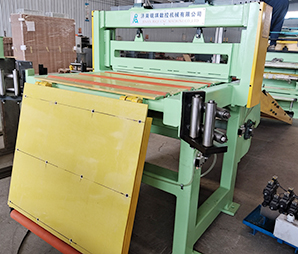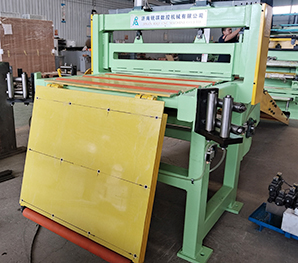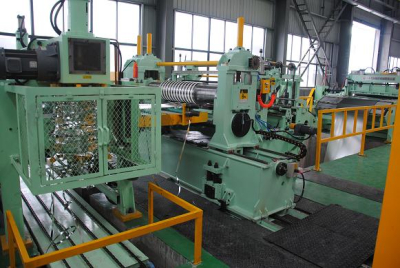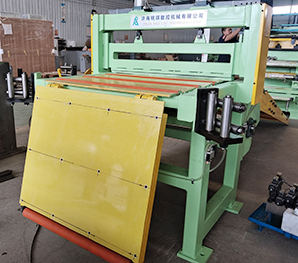
swing shear machine
Smoother transition for better take-up, reducing tension fluctuation
The swing bridge is installed between the shearing sections. It ensures the strip condition after the upstream shearing is transferred to the downstream station in a stable manner, reducing vibration and mis-tracking caused by changes in material tension.Improves longitudinal slitting line continuity and operational stability
It provides stable transfer and guidance under continuous production takt, minimizing downtime risk caused by unstable strip conditions and enhancing overall line reliability.Optimizes strip guidance to improve shearing accuracy
With proper support and guiding structures, the strip maintains the correct running path between shearing sections, reducing accumulated deviation and improving consistency in slitting width and spacing.Reduces secondary deformation and warping risk
For strip steel, medium-thick plates, and stainless-steel coils, the swing bridge transition helps reduce localized bending and stress concentration, thereby lowering risks of waviness and warping.Compatible with various materials and thickness ranges
Designed for strip steel, medium-thick plates, and stainless-steel coil materials, the structure and support can be optimized according to thickness range, strip width, and running speed, offering strong adaptability.Enhances surface protection
The design of support and contact areas helps reduce the risk of scratches, dents/press marks, and surface damage—especially important for stainless steel and other high-surface-quality requirements.Wear-resistant and reliable for long-term continuous operation
Key load-bearing and guiding components are built with wear-resistant designs to improve impact resistance and service life, reducing maintenance frequency.Easy maintenance and adjustment to minimize downtime
Facilitates onsite inspection and adjustment (e.g., guiding clearance, support position, etc.), helping reduce changeover and maintenance downtime.
Product Details
1. Equipment Position & Function
The swing bridge is installed between the shearing sections on the longitudinal slitting line. It takes over the strip condition produced by the upstream shearing process and guides the material stably to the downstream station. With a properly designed support and motion/guiding system, it buffers material fluctuations caused by changes in tension and running speed, thereby improving overall line continuity and shearing accuracy.
2. Applicable Materials
Strip steel
Medium-thickness plates
Stainless-steel coil materials
(According to thickness, width, and material hardness, the support scheme can be further customized.)
3. Key Benefits
Smoother transition: Reduces vibration and mis-tracking caused by tension fluctuations.
Improves line stability: Minimizes downtime risk caused by unstable strip conditions.
Optimizes guidance trajectory: Reduces deviation accumulation and improves consistency in slitting width and spacing.
Reduces secondary deformation: Lowers the risk of localized bending, waviness, and warping.
Surface-friendly: Helps reduce scratches, dents/press marks, and surface damage—especially suitable for stainless steel surface requirements.
Wear-resistant and reliable: Key load-bearing and guiding components are designed for wear resistance to support long-term continuous operation.
Easy maintenance: Convenient to inspect and adjust on site, shortening downtime.
4. Structure & Configuration (To be replaced by your actual details)
Support/guide components: Wear-resistant support and guiding structure
Transition take-up zone: Ensures stable transfer between the upstream and downstream shearing stations
Adjustment method: Used for on-site fine tuning of guiding clearance, support positions, etc.
Safety protection: Safety guards/interlocks (subject to actual configuration)
5. Options / Customization
Customize support parameters according to material thickness, strip width, and running speed
Optimize surface protection materials/contact methods (for stainless steel applications)