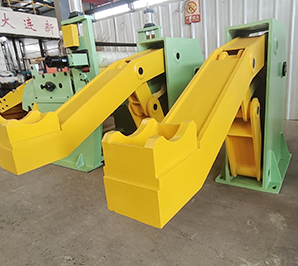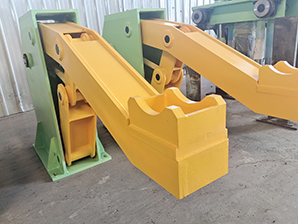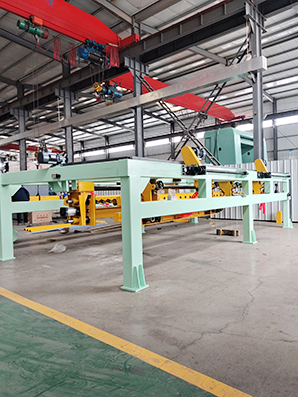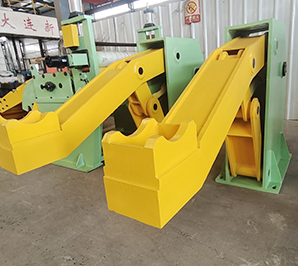
supporting reinforcement
Main Functions:
Improve Cutting Accuracy: Auxiliary support reduces displacement and deformation, making the cross-cut line align more precisely.
Ensure Cutting Quality: It reduces burrs, tearing, and uneven edges, resulting in a smoother and cleaner cut surface.
Stabilize the Processing Process: By lowering vibration and force fluctuations, it ensures stable output during continuous operation.
Protect Materials and Equipment: It minimizes abnormal forces on the material, reducing impact and wear on the blade/tool or related mechanisms.
Increase Efficiency: While maintaining quality, it reduces rework and setup/adjustment time, improving production throughput.
Extend Service Life: A more rigid structure reduces unnecessary wear and damage, lowering maintenance costs.
Product Advantages:
Solid Structure: Designed with a more reasonable load-bearing structure to enhance compression resistance and anti-deformation capability.
Strong Stability: The material is less likely to shift during cutting, making cross-cut line positioning more reliable and improving product consistency.
Easy Installation & Maintenance: If applicable, a modular or convenient installation design makes replacement and maintenance easier.
Broad Applicability: Suitable for processing different material thicknesses/widths(Tailored to your needs)。
Durable and Wear-Resistant: Key contact areas use wear-resistant design/materials to reduce performance degradation over long-term use.
Higher First-Pass Yield: Stable support and precise line positioning reduce defective products, improving overall yield.
Lower Total Cost: Reduces rework and the frequency of downtime for maintenance, lowering the overall operating cost.
A structural part that provides extra support and guidance to the material during horizontal cutting.
It offers support when cutting forces, vibration, or material loosening occur, helping prevent material sagging, shaking, or positional deviation.
With a rational structural design, it improves the overall system stability and enhances the controllability of the cutting process.
It can reduce stress concentration caused by cutting, thereby improving the durability of both the component and the equipment.
Common forms include: support bars, support plates, guide elements, and bracket/clamping-type structures
Main Functions:
Improve Cutting Accuracy: Auxiliary support reduces displacement and deformation, making the cross-cut line align more precisely.
Ensure Cutting Quality: It reduces burrs, tearing, and uneven edges, resulting in a smoother and cleaner cut surface.
Stabilize the Processing Process: By lowering vibration and force fluctuations, it ensures stable output during continuous operation.
Protect Materials and Equipment: It minimizes abnormal forces on the material, reducing impact and wear on the blade/tool or related mechanisms.
Increase Efficiency: While maintaining quality, it reduces rework and setup/adjustment time, improving production throughput.
Extend Service Life: A more rigid structure reduces unnecessary wear and damage, lowering maintenance costs.
The company’s primary business scope includes precision sheet‑metal leveling machines, decoiling‑stop‑and‑shearing lines, decoiling‑leveling lines, decoiling‑slitting lines, flying shear lines, decoilers, winders, belt tensioners, and decoiling‑blanking lines, among others.
Our service philosophy is to take quality as the foundation and integrity as the driving force for development, providing customers with cost‑effective products and high‑quality, efficient services, while fostering long‑term, mutually trusting, and mutually beneficial partnerships.