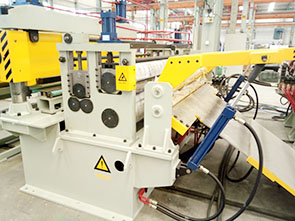
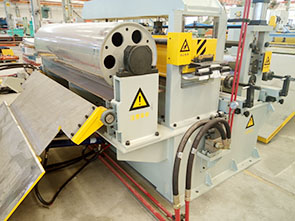
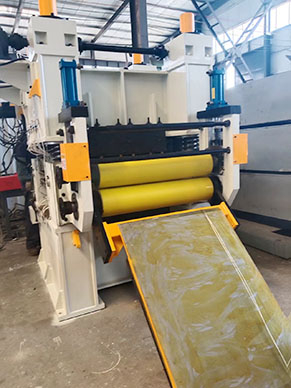
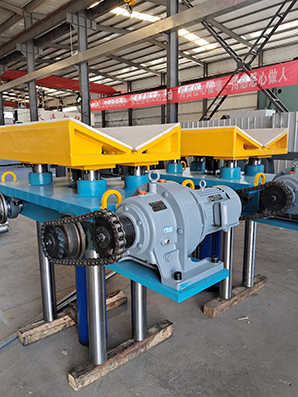
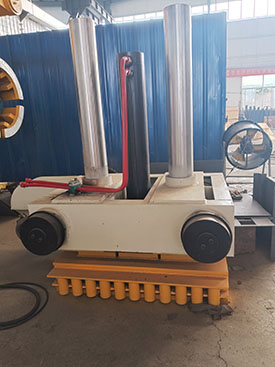
Traction coil feeding device
Functions of the Feeding Machine (Feeding Machine Components)
1. Coil loading and guiding
Feeds the metal coil smoothly into the processing area, ensuring correct material travel direction and stable positioning.
2. Traction transport and feed control
Uses traction drive to maintain a stable feed speed, preventing material slippage, creeping, or intermittent running.
3. Stable tension control
Works together with the tension control system to keep the coil at an appropriate tension during processing, reducing tension fluctuations and the risk of wrinkling or creasing.
4. Ensuring web alignment and positioning accuracy
Uses guiding and clamping structures to align the coil in the width direction, improving consistency for subsequent cutting and processing.
5. Improving process stability
Supports smooth transitions during start-up, operation, and deceleration, reducing quality issues caused by feed deviations.
Advantages of the Feeding Machine Components
1. More stable feeding and higher precision
Reduces material vibration and deviation, improving product dimensional consistency and edge quality.
2. Less scrap and edge-cut defects
More stable tension and alignment reduce waste and losses caused by cutting errors.
3. Strong reliability and long service life
Robust key components are designed for continuous production conditions, lowering the failure rate.
4. Easy maintenance and quick adjustments
Reasonable component layout enables faster inspection and parameter changes, improving equipment uptime.
5. Reduced running vibration and better smoothness
Allows smoother coil travel and minimizes the impact of vibration on processing quality.
6. Enhanced safety and easier operation
Provides more controllable operation, reduces the risk of abnormal feeding, and makes on-site management and operation more convenient.