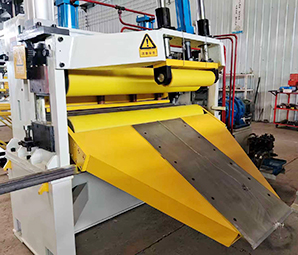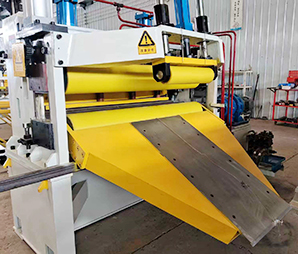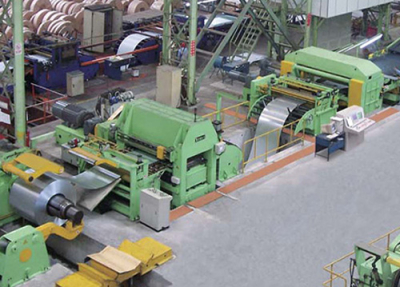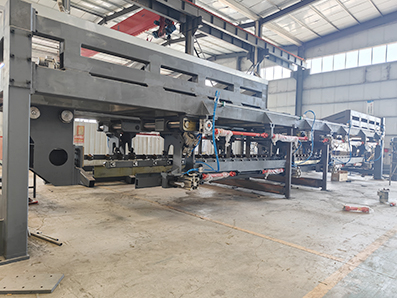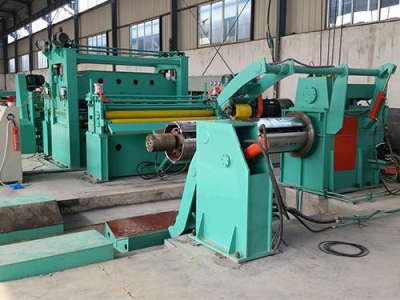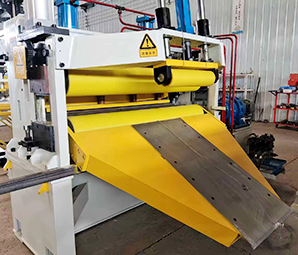
leveling transmission
Core Performance Advantages
High precision and high repeatability: achieves sub-micron to micron-level flatness and positioning accuracy, ensuring downstream process stability.
Closed-loop servo and self-tuning: servo closed-loop control with self-tuning algorithms reduces manual adjustment time and improves stability.
Flexibility and Integration
Automatic/manual leveling modes: switches between automatic and manual leveling to suit different process conditions.
Modular and easy to integrate: standardized mounting hole patterns and compact design enable rapid integration with optical tables, workstations, strip lines, rolling mills, etc.
Multi-protocol communication: supports EtherCAT, CANopen, Profinet, Modbus, etc., facilitating linkage with host systems and other equipment.
Mechanical and Materials Reliability
High-rigidity structure and low-backlash design: ensures long-term stable operation and reduces fluctuations and errors.
Wear-resistant materials and surface treatments: rollers, guides and other critical components use high-hardness materials with hardening/chrome plating for extended life.
Dust- and dirt-resistant design and ease of maintenance: surface treatment and design facilitate cleaning and upkeep.
Tension Coupling and Process Adaptability
Tension control coupling: coordinated with front/back tension control to suppress waviness and strip deformation, improving overall processing quality.
Wide range adaptability: covers multiple strip widths and thicknesses; parameters can be customized to maximize line applicability.
Safety and Compliance
Safety protection design: emergency stops, limit switches, overload protection, etc., enhancing operator safety.
Standard certification options: CE, RoHS compliance; IP ratings can be extended as needed to suit harsh environments.
Operations and Service Value
Predictive maintenance friendly: built-in diagnostics and monitoring reduce unexpected downtime.
Spare parts and technical support: fast parts availability, on-site commissioning and training, reducing maintenance costs.
Overview and Positioning
Purpose: To achieve horizontal leveling and stable control of thickness/flatness of metal strips on a metal strip processing line, ensuring stable downstream processes such as rolling, shearing, or coating.
Applications: Leveling drive unit at the infeed/outfeed of the strip, suitable for thin to medium-thick metal strips with a wide width range.
Key capabilities: High-precision horizontal leveling, closed-loop servo control, tension coupling, easy integration, optional automatic/manual leveling.
Bill of Materials (BOM) – sample configuration (please refer to your actual specification sheet for specifics)
Main Drive Unit
Function: Provides stable rotation and torque output to the leveling roller assembly, supports closed-loop control.
Typical model features: Servo motor + precision reducer / ball-screw reducer
Power range: 1.5–4 kW (determined by strip width, thickness, and required leveling speed)
Control interfaces: EtherCAT / CAN / PROFINET, etc.
Leveling Roller Assembly
Materials & surface: High-hardness steel or alloy, hardened/chrome-plated surface for wear resistance.
Dimensions & spacing: Roller diameter and pitch customized according to strip width and frame mounting holes.
Adjustment Mechanism
Purpose: Achieves micro-adjustment of roller height/angle to reach final leveling.
Drive methods: Servo micro-adjustment, pneumatic or hydraulic fine-tuning (switchable between automatic/manual).
Adjustment range & resolution: Typically ±0.5–±5.0 mm alignment/height adjustment, resolution commonly 0.01–0.1 mm.
Tension Control & Transmission Components
Tension device: Linked to front/back strip tension control to ensure stable tension during leveling, preventing the introduction of new bends/waviness.
Transmission components: Linear guides, ball screws, gearing/pulleys, ensuring smooth motion.
Control System & Software
Control core: PLC / embedded controller or industrial PC, paired with a motion control card.
Communications & interfaces: EtherCAT, CANopen, Modbus, USB/RS-232, etc., supporting integration with host systems or other equipment.
Key features: Leveling algorithms, self-tuning of closed-loop parameters, data collection & reporting, alarms & diagnostics.
Safety: Safety enclosure and emergency stop devices, overload protection, limit switches.
User interface: Simple manual adjustment interface or graphical parameter-setting interface.
Core Parameters (examples; use your actual specifications)
Coverage width: 600–1800 mm (customizable wider or narrower)
Strip thickness range: 0.1–3.0 mm
Leveling accuracy: ±0.02–±0.05 mm (depends on strip, speed, and sensor resolution)
Adjustment speed: 0.5–2.0 mm/s (roller height/leveling adjustment speed)
Maximum line speed: 0–120 m/min (depends on process)
Filtering & closed-loop control: PID / adaptive control, servo closed-loop
Control interfaces: EtherCAT, CAN, Profinet, USB
Power supply: 220–240V/3-phase or 24VDC auxiliary power, depending on system design
Mechanical weight & dimensions: to be defined by assembly; provide mounting hole positions and mounting scaffold dimensions
Structure & Materials Highlights
Mechanical structure: High-strength aluminum alloy frame with localized steel reinforcement; critical areas use high-hardness materials.
Sliding & guiding: Linear guides + ball screws or linear motors to ensure high rigidity and low backlash.
Surface treatment: Corrosion-resistant coatings, hardened surfaces, dust- and dirt-resistant design for easy cleaning.
Dimensional tolerances & alignment: Key components' coaxiality/parallelism must meet design tolerances to ensure consistent multi-point alignment.
Control & Integration Considerations
Control modes: Manual micro-adjustment, automatic leveling, closed-loop servo control.
Communications & protocols: Compatible with existing factory buses to facilitate integration with higher-level systems.
Sensing/measurement: Integrated or optional external laser-tracking sensors and encoders for closed-loop feedback.
Software capabilities: Parameter auto-tuning, historical data logging, status diagnostics, fault alarms.
Installation & Maintenance Considerations
Installation points: Ensure base is flat and well-aligned, mounting holes aligned, and power and signal cables correctly connected.
Maintenance points: Regularly check roller wear, guide rail lubrication, fastener tightening, and sensor/connector condition; perform regular calibration and closed-loop parameter tuning.
Spare parts planning: Keep commonly worn parts such as joint bearings, seals, and sensors on hand.
Selection & Customization
Selection considerations: Determine strip width/thickness, target leveling accuracy, target line speed, control interface, whether automatic leveling is required, and on-site environment (temperature, humidity, dust level).
Customization options: Wider width/higher load, different control protocols, additional protective covers, integrated tension control, custom geometries and mounting holes, IP ratings.
Customization process: Requirements discussion → initial quotes → prototype/ pilot verification → mass production.
If you’d like, I can format this into a complete English product-page draft (with BOM table, technical parameter sheets, and installation diagrams) tailored to your exact specifications and target market. Just tell me:
Target market and language (Chinese/English pages, any other languages)
Specific strip width/thickness ranges, required leveling accuracy, line speed, control interfaces
Whether you need protective covers, IP ratings, tension control integration, dimensions, etc.
If you want attached data sheets, CAD drawings, or installation/user manuals links
I can then deliver a ready-to-paste English worded draft and data sheets.