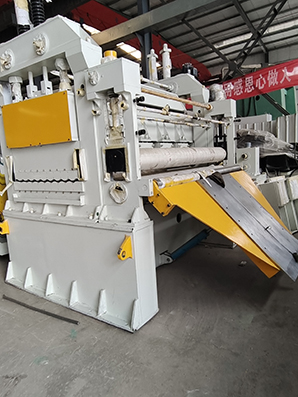
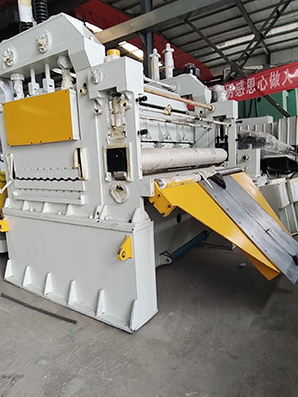
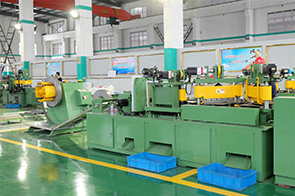
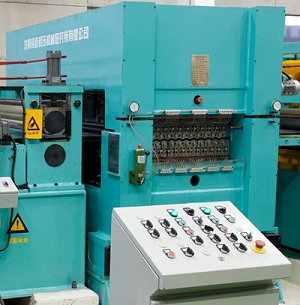
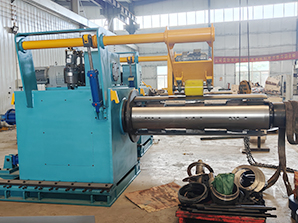
correction of deviation
Main functions:
Correct lateral deviation of the material
During cross-cut/slitting, the web or material may shift due to tension changes, tension imbalance, worn guide rollers, uneven material, etc. The deviation-correction component pulls the material back to the set cutting centerline.Ensure cutting accuracy and stable web alignment
Keep the cutting knife/shear path in the correct positional relationship with the material edge at all times, reducing issues such as mis-cutting, edge waviness, and burrs.Reduce scrap rate and downtime frequency
By performing real-time correction, it minimizes scrap, rework, and adjustment time caused by material “wandering” (running off-center), thereby improving yield.Improve overall line stability
Maintains alignment during high-speed and long-duration operation, reducing the impact of mechanical drift on product quality.
Product advantages of deviation-correction components
High-precision correction capability
Fast response and accurate control enable timely adjustments when the material has even slight deviations.Stable and reliable performance with strong anti-interference ability
Performs well under conditions such as vibration, load variation, and speed fluctuations, ensuring stable long-term operation.Real-time feedback control (automatic closed-loop)
Uses position sensing and feedback control to achieve automatic deviation correction, reducing manual intervention.Strong adaptability
Suitable for cross-cutting/slitting applications across different widths/thicknesses/material types and various line speeds.Easy maintenance and low operating cost
Rational structural design, convenient maintenance, and reduced downtime for inspection and service.Improve efficiency and yield
Better correction reduces edge offset and mis-cut risks, thereby increasing throughput and improving first-pass yield.