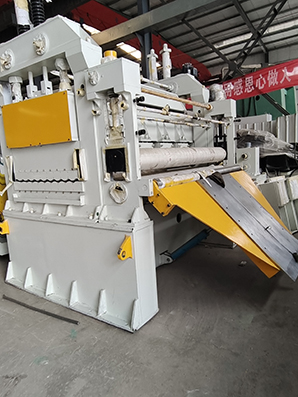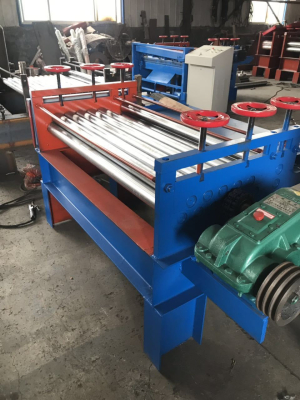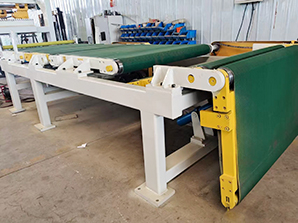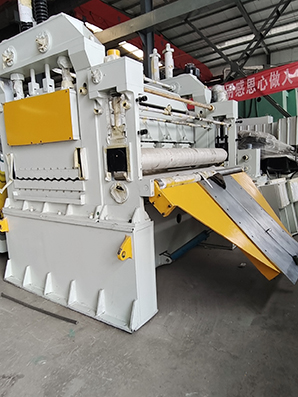
deviation-correction component
Here is the English translation of your bullet points:
Precise centering and positioning correction: closed-loop control, real-time correction of drift and knife-edge alignment errors, improving cutting precision and consistency of finished width.
High-speed stability: dedicated drive and tension control algorithms ensure stable deviation correction even at high line speeds, reducing fluctuations.
Waste rate significantly reduced: stable clamping, correction, and tension management decrease edge scrap, rework, and re-cutting incidents.
Modular and high compatibility: designed as modular components, easy to integrate with different models of slitting lines, various materials (steel, aluminum, copper, etc.), and coil thickness/width, facilitating upgrades.
Easy maintenance and high reliability: rugged construction, easy maintenance, critical components easy to replace and calibrate, downtime reduced.
Real-time data and traceability: integrated sensors and PLC/data acquisition provide real-time diagnostics, operational history, and traceability, supporting MES/ERP integration.
Energy savings and cost benefits: by optimizing tension and deviation control, reduce energy consumption, improve line utilization, and lower total cost of ownership.
Safety and user-friendliness: intuitive HMI, multi-level safety protections, and fault self-diagnosis, enhancing on-site safety.
Broad applicability: suitable for metal coil processing lines, including galvanizing, aluminizing, and pickling, and compatible with a range of coatings, materials, and coating thicknesses.
Here is the English translation of your product documentation:
Product Overview
Name: Deviation Correction Module
Function: In slitting lines and coil processing environments, implements closed-loop correction of drift and knife-edge alignment to improve cutting accuracy, line-speed stability, and consistency of finished width; supports modular integration, rapid upgrades, and multi-process adaptation.
Scope: Metal coil processing (steel, aluminum, copper, etc.), pre- and post-treatment lines, pickling/plating processes, and other continuous coil systems that require high-precision drift correction and tension coordination.
Core Advantages
Precise centering and positioning correction: closed-loop control, real-time correction of drift and knife-edge alignment errors, significantly improving cutting precision and consistency of finished width.
High-speed stability: dedicated drive and tension control algorithms maintain stable correction at high line speeds, reducing fluctuations.
Waste and rework reduction: stable feeding, correction, and tension management reduce edge scrap, rework, and recutting.
Modular and high compatibility: modular design, easy to interface with different models of slitting lines, various materials and thickness/width ranges of coils, facilitating upgrades.
Easy maintenance and high reliability: rugged construction, easy maintenance, key components quickly replaceable and adjustable, downtime reduced.
Real-time data and traceability: integrated sensors and data acquisition provide real-time diagnostics, operating trajectories, and historical data, enabling MES/ERP integration and quality traceability.
Energy efficiency and cost benefits: by optimizing tension and drift control, lower energy consumption, higher line utilization, and reduced total cost of ownership.
Safety and user-friendliness: intuitive HMI, multi-level safety protections, and fault self-diagnosis, improving on-site safety.
Broad applicability: suitable for galvanizing, aluminizing, pickling, and other processes’ slitting lines, compatible with various coatings, materials, and coating thicknesses.
Main Functions and Technical Features
Closed-loop control: sensors collect drift, centering, and knife-edge position; PLC/controller computes in real time and drives the correction mechanism to form a closed-loop feedback.
Tension-coordination control: linked with existing tension systems to coordinate tension and ensure correction stability.
Real-time diagnostics and self-diagnosis: operating status, sensor health, and fault information displayed in real time; remote diagnostics supported.
Data and interfaces: data acquisition, storage, and export; supports MES/ERP integration; optional common industrial protocols such as Modbus TCP/RTU, Ethernet/IP, Profinet, OPC UA, etc.
Modular structure: core deviation-correction module plus optional tension control unit, sensing unit, interface box, etc., supporting different models and process combinations.
Compatibility and extensibility: good compatibility with multiple materials (steel, aluminum, copper, etc.), multiple coatings, and coils of various thicknesses and widths; facilitates secondary upgrades.
Structure and Interfaces
Mechanical structure: modular housing + deviation-correction drive unit + sensing assembly + electrical interface box, enabling easy on-site installation and maintenance.
Electrical interfaces: standard power, control interfaces, and communication terminals, supporting rapid interfacing with existing control systems.
Software and diagnostics: built-in diagnostics interface, supports parameter calibration, deviation curves, fault self-diagnosis, and history data playback.
Installation and Integration Points
Installation considerations: conduct compatibility assessment with existing slitting line wiring/routing, tension system, and sensor layouts; provide installation guidelines and interface checklists.
Commissioning considerations: initial centering/knife calibration, closed-loop parameter tuning, and tension-coordination debugging; provide on-site and remote debugging support.
System integration with existing equipment: provide data interfaces, protocol mappings, and data dictionaries to ensure smooth MES/ERP data exchange.
Maintenance and Services
Maintenance considerations: modular design facilitates replacement of key components; centralized maintenance points; downtime is minimized.
Diagnostics and fault handling: self-diagnosis capabilities, remote diagnostics support, rapid fault localization processes.
Warranty and after-sales: standard warranty, spare parts supply, upgrades and training services.