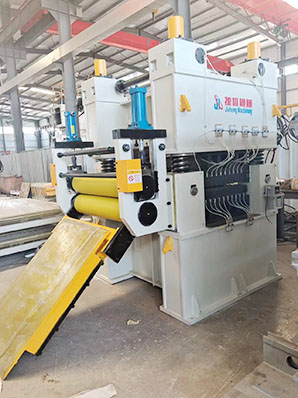
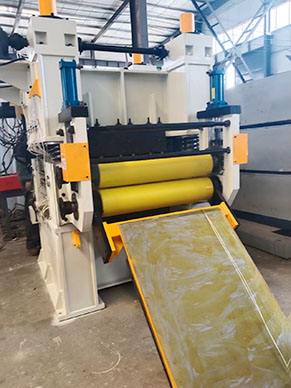
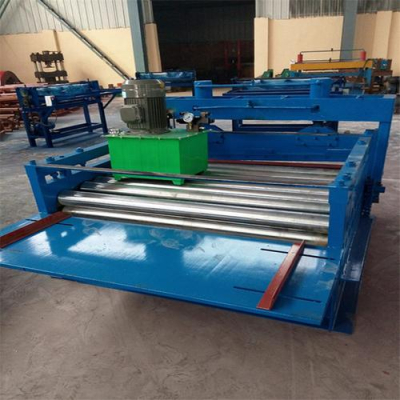
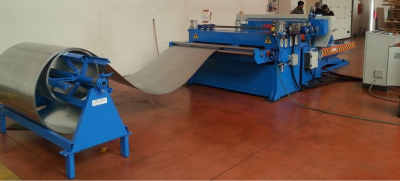
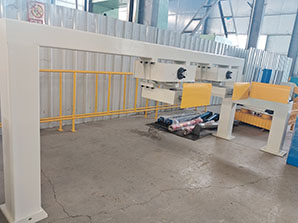
plate leveling machine
Core performance advantages
High-precision leveling and thickness uniformity: effectively eliminates waviness, bowing, and thickness non-uniformity of the coil before downstream processes, improving downstream processing quality.
Strong suppression of waviness and residual-stress relief capability: through multi-roller leveling and tension control, reduces residual stress and enhances coil flatness stability.
Broad material and thickness adaptability: can process a variety of steels (e.g., cold-rolled, galvanized, coated, stainless steel, etc.) and a wide thickness range.
Production efficiency and stability
High-speed, stable production capability: intelligent tension and leveling control; increases line speed while maintaining flatness, reducing defect rate.
Online inspection and closed-loop control: integrated thickness and flatness inspection, automatic parameter adjustment, reducing manual intervention.
Automation and intelligence
PLC/servo drive, parameter presets and batch production: enables fast line changeovers and stable execution of repeatable processes.
Data collection and traceability: production data, equipment status, maintenance records, etc., traceable for quality management and improvement.
Equipment structure and maintenance
Modular, easy-maintenance design: easily replaceable wear parts and rapid maintenance procedures, reducing downtime and maintenance costs.
High-rigidity frame and vibration-damping design: enhances long-term stability, reducing deformation and deviation over time.
Safety and human-machine interface
Comprehensive guarding, emergency stop and safety interlocks, improving operator safety.
User-friendly human-machine interface and simple operating procedures, lowering operator training costs.
Integration and expansion
Easy integration with upstream and downstream equipment (e.g., slitting, coating, cutting) and MES/ERP systems, supporting future expansion and upgrades.
Compatible with inline coating/inspection system integration, enhancing overall quality control along the line.
Cost and return on investment
Reducing scrap rate, shortening delivery lead times, reducing manual intervention, and improving production efficiency, leading to faster payback and better ROI.