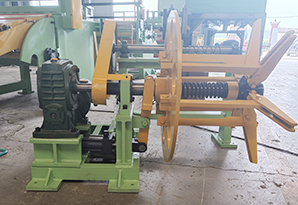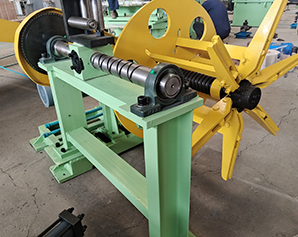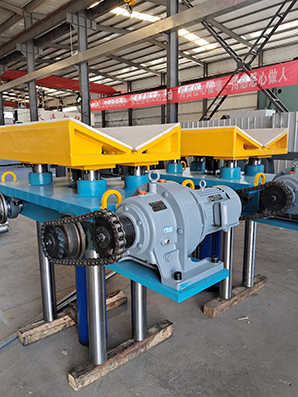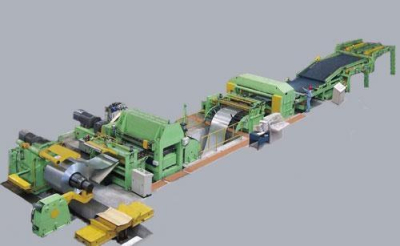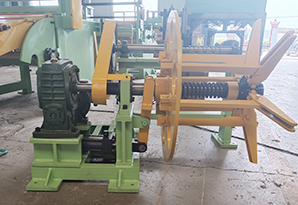
Waste-edge rewinder
Increase material utilization and significantly reduce edge trim waste and disposal costs.
Automatic, stable tension control, winding tight and uniform, minimizing roll deformation, tearing, and loose winding.
Consistent winding quality, improving the finished product appearance and downstream processing stability.
Easy to integrate with existing production lines (e.g., slitters, printers, extrusion lines), with short changeover times and low integration costs.
Flexible parameters and easy adjustment, suitable for a wide range of materials, widths, and thicknesses; highly adaptable.
Highly automated (sensors, PLC/HMI, etc.), production data traceable, reducing manual intervention and operator errors.
Compact structure with a small footprint, low installation and maintenance costs.
High energy efficiency and quiet operation, lowering overall operating costs.
Reliable safety design (guards, emergency stops, interlocks) to enhance operator safety.
Excellent scalability, supporting multi-machine networking, remote diagnostics, data export, and other features.
Significant environmental benefits, reducing the environmental impact of waste transport and disposal.
Broad applicability across metal coil processing, packaging materials, paper-based materials, and other process lines.
Product positioning and objectives
Used to wind and reclaim edge trim generated after printing, slitting, or trimming, by applying closed-loop tension control for winding and recovery. This improves material utilization, reduces edge trim costs, and facilitates subsequent recycling and secondary processing.
Applicable materials and scenarios
Films, packaging materials, paper-based materials, and edge waste generated by various process lines (slitting machines, printers, extruders, etc.).
Compatible with a wide range of widths and thicknesses; easily interfaces with existing production lines.
Main features
Efficient recovery and compact design: improves material utilization, winds tightly and flatly, and reduces roll deformation and loose winding.
Closed-loop tension control: automatic, stable tension control ensuring consistent winding quality.
Easy system integration: interfaces with slitting, printing, extrusion equipment; short line-change times and low integration costs.
Automation and digitization: sensors, PLC/HMI, etc. enable automated control; production data traceable and supports remote diagnostics.
Safety and reliability: comprehensive guarding, emergency stop, and interlock designs to enhance operator safety.
Energy-efficient and low-noise, easy maintenance: compact structure, small footprint, quiet operation, low maintenance costs.
Scalability: supports multi-machine networking, data export, remote diagnostics; easy to upgrade and expand.
Structure composition (typical)
Feeding and pretreatment unit (sliding frame/guide rollers, tension sensors, etc.)
Closed-loop tension control system (sensors, servo/stepper drives, control cabinet)
Rewinding unit (rewind rolls, tension balancing mechanism, surface protection components)
Edge trim cutting and waste handling unit (edge trimming, waste separation and collection devices, waste bin or waste discharge interface)
Control and human-machine interface (PLC/HMI touchscreen, Ethernet communication, sensor interfaces)
Safety protection and emergency stop devices (protective covers, interlocks, emergency stop buttons, warning systems)
Typical technical parameter ranges (for reference; specifics depend on model)
Processing width (coverage range): approximately 1000–3000 mm
Maximum rewind diameter: approximately 800–1200 mm
Tension control method: closed-loop tension control
Line speed range: approximately 0–200 m/min (adjustable by model)
Tension setting range: multi-step or continuous adjustment to cover various materials
Power supply/drive: 380V 3P 50/60 Hz (or as specified)
Power range: approximately 20–60 kW (depends on configuration)
Control system: PLC/HMI, supports fieldbus communication, data collection and export
Air supply requirements: compressed air supply (as per model configuration)
Dimensions and weight: customized per model; on-site space requirements to be confirmed
Control and software
Touchscreen HMI for parameter setting, operation status, alarm logs, line synchronization, etc.
Data collection and traceability; supports export to CSV/Excel
Remote diagnosis and maintenance support (optional)
Safety and standards
Compliant with relevant industrial safety standards (e.g., CE/UL, configured per region/customer)
Mechanical guarding, emergency stop, interlocks, and safety interlocks
Installation and after-sales
On-site installation, commissioning, training; turnkey delivery and acceptance
Maintenance and spare parts service during the warranty period; routine maintenance recommendations and part replacement intervals
Selection and customization
Can be customized according to material types, width ranges, line speed requirements, and future expansion needs
Supports multi-machine networking, remote diagnostics, data interfaces, and various waste collection/handling options