Leveling Conveyor
Improve Production Efficiency
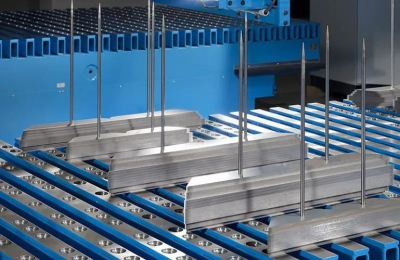
Leveling conveyor equipment can quickly and accurately complete material leveling and transfer, reducing manual intervention and significantly enhancing production line efficiency.
Ensure Product Quality
With the automatic leveling function, the equipment ensures that materials remain flat during the transfer process, minimizing deformation or damage, thereby improving overall product quality.
Reduce Labor Costs
Automated operations reduce reliance on manual labor, lowering labor costs and minimizing errors caused by human intervention.
Adapt to Various Materials
Leveling conveyor equipment can typically handle multiple types of materials (such as metal sheets, plastic sheets, etc.), offering strong versatility and adaptability.
High Stability
Equipped with advanced control systems, the equipment operates stably and can work continuously for long periods, ensuring the continuity of the production line.
Energy Saving
Efficient design and optimized transmission systems reduce energy consumption, aligning with energy-saving and environmental protection requirements.
Easy to Operate and Maintain
Modern leveling conveyor equipment is usually equipped with user-friendly interfaces, making maintenance simple and reducing downtime and maintenance costs.
Enhanced Safety
Automated operations reduce the chances of workers coming into contact with hazardous areas, improving workplace safety.
Strong Flexibility
The equipment can be adjusted according to production needs, adapting to materials of different thicknesses, widths, and types, meeting diverse production requirements.
Reduce Waste Rate
Through precise leveling and transfer, the equipment effectively minimizes material waste, lowers the scrap rate, and saves costs.
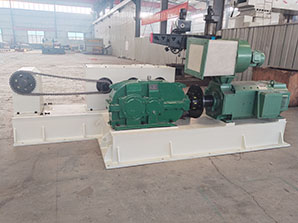
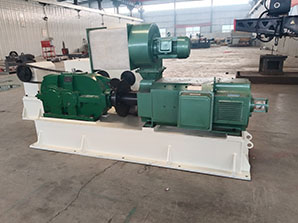
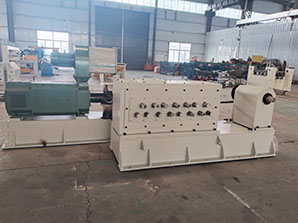
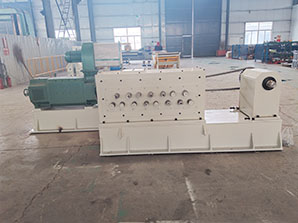
Motor: As the power source, it provides power for the leveling equipment. According to factors such as the specifications of the leveling equipment, precision requirements, and production environment, motors of different types and powers can be selected. For example, for large steel plate leveling machines, high-power three-phase asynchronous motors are often used to provide sufficient torque to drive the leveling rolls to level thick steel plates. In some small leveling equipment with high precision requirements, servo motors may be selected to facilitate precise control of the leveling speed and position.
Coupling: It is used to connect the motor shaft and the input shaft of the speed reducer, playing the roles of transmitting torque, compensating for the relative displacement between the two shafts, and buffering and shock absorption. A common type is the elastic pin coupling, which connects the two half-couplings through elastic pins. It has a certain degree of elasticity and buffering performance, and can adapt to a certain degree of axial displacement and impact load.
Speed Reducer: Its function is to reduce the high speed of the motor to a low speed suitable for the leveling work and increase the torque. Common types of speed reducers include cylindrical gear reducers and planetary gear reducers. Cylindrical gear reducers have a simple structure and high transmission efficiency, and are suitable for various working conditions. Planetary gear reducers have the advantages of small size, light weight, and large transmission ratio, and are widely used in leveling equipment with limited space.
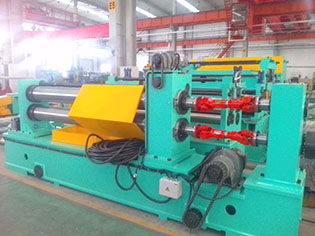
Drive Shaft: Generally made of high-strength alloy steel, it is used to transmit the torque output by the speed reducer to working components such as the leveling rolls. To ensure the rotation precision and stability of the drive shaft, multiple bearings are usually installed on the shaft for support. The type of bearing is selected according to specific load and speed requirements. For example, rolling bearings are suitable for high-speed and light-load working conditions, while sliding bearings are more suitable for low-speed and heavy-load situations.
Gear Transmission Mechanism: In some leveling equipment, gear transmission is used to achieve power transmission and speed adjustment between different shafts. By reasonably designing the module, number of teeth, and transmission ratio of the gears, the rotation speed and direction of the leveling rolls can be precisely controlled to meet the requirements of different steel plate leveling processes.
Leveling Rolls: They are the key components for directly leveling the steel plates and are usually composed of multiple upper rolls and lower rolls. The roll shafts are made of high-quality alloy steel, and the surface is quenched and ground to have high hardness and smoothness to ensure the leveling quality. The diameter, length, and number of the leveling rolls are designed according to the specifications of the leveling equipment and parameters such as the thickness and width of the steel plates. For example, for thicker steel plates, leveling rolls with a larger diameter and a greater number are required to increase the pressure and correction force on the steel plates.
Roll Spacing Adjustment Device: To meet the leveling requirements of steel plates with different thicknesses, the leveling mechanism is usually equipped with a roll spacing adjustment device. This device can achieve precise adjustment of the spacing between the upper and lower rolls through manual, electric, or hydraulic methods. Common adjustment methods include screw-nut drive, hydraulic cylinder drive, etc. The screw-nut drive method has a simple structure and high adjustment precision, but is slow in speed. The hydraulic cylinder drive method has the advantages of fast adjustment speed and large driving force, but requires the corresponding hydraulic system to be equipped.
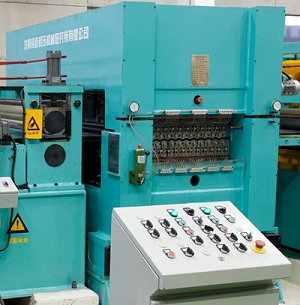
Sensors: Including pressure sensors, displacement sensors, etc. The pressure sensor is installed at the contact position between the leveling roll and the steel plate to monitor the stress situation of the steel plate during the leveling process in real time, so that the control system can adjust the leveling parameters according to the pressure changes. The displacement sensor is used to detect the position and moving speed of the steel plate to ensure that the steel plate maintains the correct traveling direction and speed during the leveling process.
Controller: Usually, a PLC (Programmable Logic Controller) or an industrial computer is used as the controller. It receives the signals fed back by the sensors, and according to the preset leveling process parameters and control algorithms, it precisely controls the rotation speed and torque of the motor, as well as the roll spacing adjustment device, etc., to achieve the automatic control and optimization of the leveling process. At the same time, the controller can also communicate with the upper computer monitoring system to achieve remote monitoring and data management.