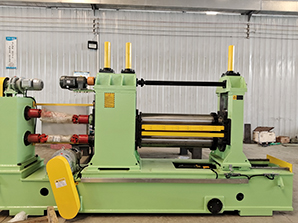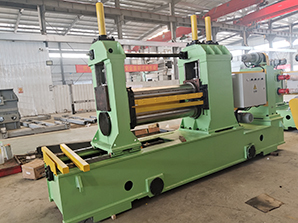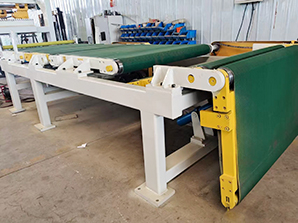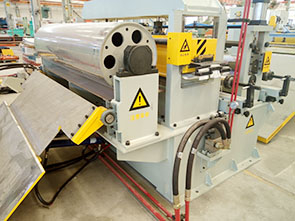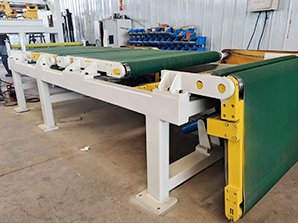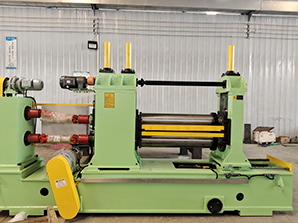
longitudinal slitting machine
High cutting accuracy: Stable longitudinal slitting width with excellent dimensional consistency
Smooth operation: Well-matched feeding and delivery mechanism with low vibration for cleaner cutting edges
High efficiency: Fast slitting speed and shorter changeover/setup time to improve productivity
Wide application range: Suitable for longitudinal slitting of various materials (e.g., metal strips, foil, films, paper, etc.)
Durable structure: Proper selection of key components ensures a long service life and easier, more convenient maintenance
Easy operation: Clear parameter setting and simple operation to reduce labor costs
Optional automation features: Such as automatic tension control, automatic edge alignment/side correction, automatic counting, or constant-speed control
Better finished product quality: Reduces burrs and ragged edges, lowering scrap rate and material waste
1. Equipment Use
A slitting machine is used to longitudinally slit roll materials (longitudinal cutting). The original strip is slit into multiple finished strips according to the set width, for subsequent processes such as stamping, roll packaging, coating, rewinding, and deep processing. It is suitable for a wide range of materials and industries, including metal strips, foil, films, and paper.
2. Working Principle
The web material is fed from the unwinding side through guiding and feeding mechanisms into the slitting zone. The material is longitudinally cut by cutting tools/shearing units. After cutting, the finished strips are guided and collected at the rewinding end (or connected, counted, and packaged according to the process). Through tension control and speed synchronization, the whole system ensures stable cutting and improved width consistency of the finished products.
3. Main Structural Features
Multi-station slitting blade/cutting section (depending on configuration): ensures stable slitting and good edge quality
Precision guiding system: minimizes web wandering and ensures accurate entry of the material into the cutting line
Matched tension and traction system (optional): provides uniform stress distribution and reduces cutting deformation
Unwinding and rewinding system (depending on configuration): supports stable rewinding tension for better appearance and dimensional accuracy
Rigid frame with anti-vibration design: maintains stability even at high running speeds
Safety guards and interlocks: enhance operator safety and improve equipment reliability
4. Control System & Operation
Touchscreen HMI: intuitive parameter setting for quick setup and changeovers
PLC / VFD / servo control (depending on configuration): achieves speed synchronization and stable operation
Automatic edge guiding / web alignment correction (optional): improves edge quality of finished products
Constant-speed operation / automatic counting (optional): adapts to different production rates and schedules
Fault alarms and protection (optional): overload, emergency stop, material run-out, and other protective functions
5. Applicable Materials
Metal materials: steel strips, aluminum strips, copper strips, stainless steel strips, galvanized strips, foil, etc.
Non-metal materials: films, paper, insulation materials, etc. (based on actual configuration and process requirements)
6. Equipment Advantages
High cutting accuracy: stable slit width with excellent dimensional consistency
Smooth operation: well-matched feeding and transporting systems with low vibration and clean cut edges
High efficiency: fast slitting speed with shorter changeover/setup time
Stable quality: reduces burrs and ragged edges, lowering scrap rate and material waste
Easy maintenance: reasonable structural design of key components for convenient daily upkeep
Optional automation features: tension control, edge correction, constant-speed control, counting, etc. (depending on configuration)