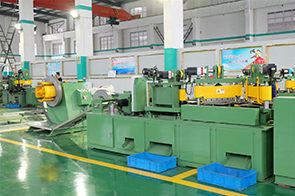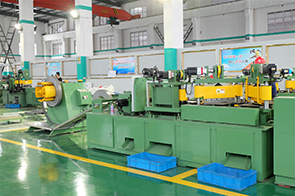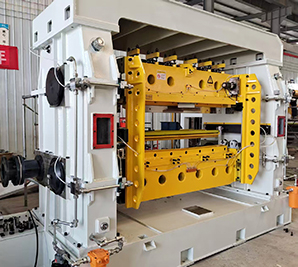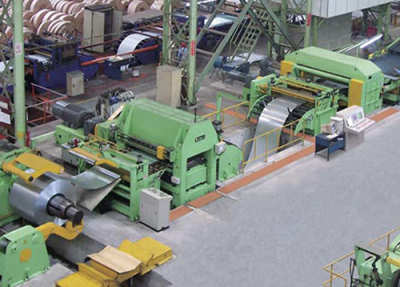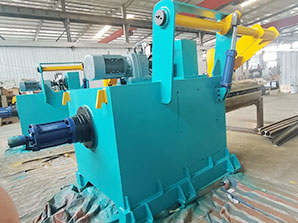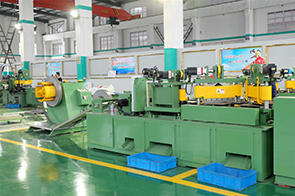
horizontal cutting line
Precise alignment for consistent cuts.
Increases production efficiency with faster setup and positioning.
Reduces material waste through optimized nesting and cut planning.
Improves repeatability and quality control with a fixed reference line.
Flexible across materials and thicknesses.
Visual cue for operators, aiding quick judgment and monitoring.
Easy integration with existing equipment; low retrofit costs.
Enhanced safety with a clearly defined cut line.
Facilitates automation and programmable cutting workflows.
Easy maintenance and quick changeovers.
The horizontal cutting line provides a stable cross-cut baseline for fast, precise, low-waste cutting. Suitable for paper, fabric, film, and other materials, compatible with most cutting equipment.
English version (Horizontal Cutting Line – Product Details Template)
Product Name
Horizontal Cutting Line (Cross-Cutting Reference Line System)
Product positioning and application scenarios
Serves as the horizontal positioning reference line in the cutting process to improve cutting accuracy, efficiency, and controllability. Widely used in cutting operations for paper, fabrics, films, woodworking boards, packaging components, and other related fields.
Key benefits
Precise alignment: Provides a stable horizontal reference line to ensure consistent cuts across batches.
Improved production efficiency: Quick positioning, shortened cutting preparation time, and reduced downtime.
Reduced material waste: Optimized layout and cut planning to minimize trim waste.
High repeatability: Fixed reference line reduces human error and facilitates quality traceability.
Easy integration: Seamless connection with existing cutting equipment and automation systems; low retrofit costs.
Enhanced safety: Clear cut boundaries reduce miscuts and injury risk.
Structure and components
Main frame: Made of stainless steel or aluminum alloy for durability and stability.
Positioning ruler/line indicator: Visible horizontal baseline for secondary confirmation.
Sensing and drive units: Optical/magnetic/mechanical positioning sensors; drive module for fine positioning.
Control interface: PLC/PC interfaces supporting programmatic control of upstream and downstream systems.
Technical specifications (illustrative; actual model may vary)
Applicable material thickness: up to Z mm (models available for thicker materials)
Power supply: AC/DC input specifications
Operating temperature and humidity: up to X°C / 95% relative humidity (non-condensing)
Dimensions/Weight: main unit dimensions W×H×D; weight approximately XX kg (model-dependent)
Working speed: metrics for horizontal positioning and cut-preparation time
Environmental conditions: dust rating, IP protection rating, etc.
Applicable materials and thickness range
Material examples: paper, cardboard, fabric, film, PVC/OPP, wood panels and composite materials, etc.
Thickness range: from thin to medium-thick materials; specifics depend on model configuration
Compatibility and interfaces
Interfaces with common cutting machines, slitting machines, and packaging lines (PLC/IO/Modbus/EtherCAT, etc.)
Downstream/upstream automation programming interfaces; supports customized workflows
Installation and integration
Installation options: floor-standing or embedded configurations
Commissioning points: initial calibration, precision adjustment, alignment with cutting equipment
External equipment required: sensors, power supply, control PC/PLC, etc.
Use and operation notes
Intuitive visual cues reduce operator difficulty
Common maintenance points: regular calibration, clean rails, check connections
Safety and compliance
Protective design to minimize misoperation and false triggering
Meets relevant industrial safety standards and quality systems (e.g., ISO/CE), specific to model
Maintenance, durability, and lifespan
Easy maintenance; calibration parts and consumables are easy to replace
Designed for long-term stability and component durability to reduce O&M costs
Certifications and standards
Industry certifications (e.g., CE, FCC, ROHS, etc.; listed per model)
Packaging, transportation, and storage
Protective packaging and materials
Storage conditions and protection requirements
Pricing, delivery, and after-sales
Price range and delivery lead times depend on configuration
Warranty and services: machine warranty period, remote diagnostics, on-site maintenance, spare parts supply
Typical application cases