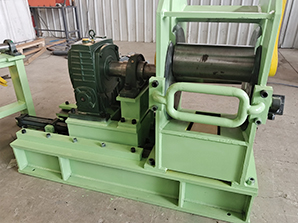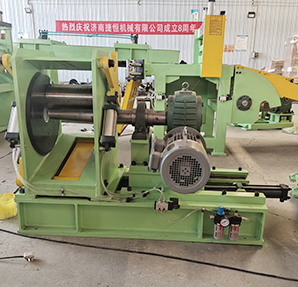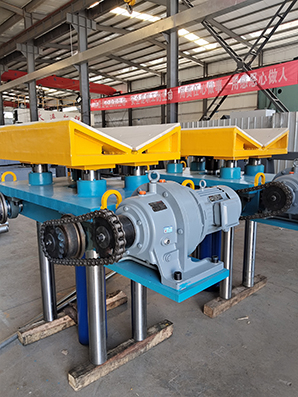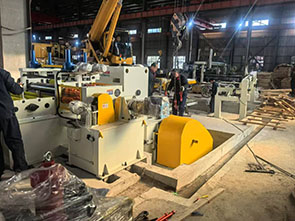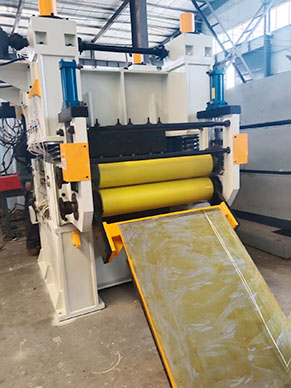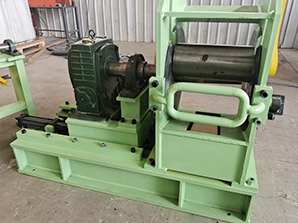
Offline Slitter
Offline Edge Trimmer
An off-line equipment that complements slit/slitting lines, operated independently from the main production line, dedicated to handling edge scrap produced after slitting.
Core Applications
Edge scrap recovery and processing: automatically rewinds, compacts, and cuts the narrow edge waste (edge scrap) generated after slitting and coil material, facilitating recycling.
Independent slitting/trimming: offline unit performs secondary slitting, trimming, and rewinding on coils (metal, non-woven fabric, film, paper) without occupying the main production line.
Compatible with slit lines: integrated with slitters, cross-cutters, and leveling lines to solve edge scrap tangling and handling issues on the main line, improving overall line efficiency.
Flexible production: during main-line operation, the offline machine processes edge scrap synchronously; when the main line stops, the offline machine can operate independently to fulfill slitting/trimming orders.
Applicable Materials & Industries
Metals: steel strips, aluminum strips, copper strips, stainless steel strips (cold-rolled/hot-rolled slit lines)
Non-metals: nonwoven fabrics, films, paper, leather, synthetic fiber rolled materials
Industries: metal processing, packaging, building materials, hygiene products, printing, textiles
Core Advantages
Does not affect the main production line; production can continue without downtime
Edge scrap is neatly wound, with no tangling or safety hazards
Waste is collected for centralized recycling, reducing manual handling and improving environmental protection
Prodt Overview
The Offline Edge Trimmer / Offline Slitter is an independent attachment for slitting and cutting lines. It focuses on processing edge trims, waste edges, and scrap generated after slitting, operating separately from the main line and not occupying the main production line. It supports integrated workflows for recycling, trimming, and rewinding.
Scope of Applications & Industries
Suitable materials: metals (steel strips, aluminum strips, copper strips, stainless steel strips, cold-rolled/hot-rolled slit lines), nonwovens, films, paper, leather, and synthetic fiber rolled materials
Industries: metal processing, packaging, building materials, hygiene products, printing, textiles
Core Functions & Benefits
Does not affect the main production line: offline operation keeps the main line running, improving overall line efficiency
Edge scrap recovery and neat rewinding: automatic winding, compaction, and cutting ensure edge trims are untangled and easy to recycle
Independent slitting/trimming: secondary slitting, trimming, and rewinding for edge trims with support for various edge shapes
Good compatibility with main-line equipment: can pair with slitting machines, cross-cutters, leveling lines to resolve edge scrap tangling and processing challenges
Automation & monitoring: automated feeding, tension control, positioning/clamping, discharging, data recording, and networked monitoring
Safety & environmental: robust safety protections, centralized waste collection, reduced manual handling, and compliance with environmental requirements
Automation & System Integration
Automatic feeding, alignment, discharge, and waste management, with data interfacing to upstream slitters, leveling lines, and cut-to-length lines
Customization Opportunities
Tailored design and selection guidance based on specific materials, widths, thicknesses, edge scrap shapes, and line pace to ensure seamless integration with existing production lines and optimal cost performance
If you wish, I can provide precise model recommendations, parameter lists, and a technical specification ready for quotation based on your target industry, materials to be processed, width/thickness ranges, production targets, and budget. What details would you like to provide?
Suggested details to share:
Target materials and specifications (e.g., steel strip, nonwoven, etc.; max width; thickness range)
Line speed and edge scrap handling requirements
Desired automation level and preferred communication interfaces
Installation site conditions (power supply, air supply, floor space, noise requirements)