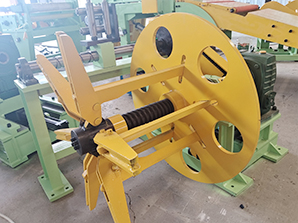
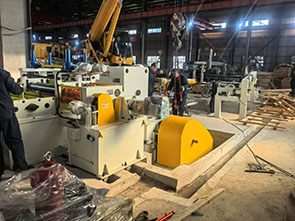
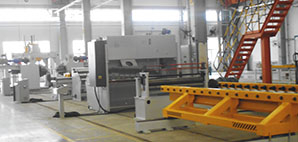
Edge Trim Rewinder
Increase waste collection efficiency and reduce cleanup costs
Specialized waste trolleys can reliably collect edge waste, trimmed debris, burrs, etc., reducing dispersion and secondary cleanup workload.
Strengthen workplace safety and hygiene
Enclosed or lid designs prevent spills and leaks, minimize waste impact on the work area; comply with industry safety standards to lower occupational risk.
Corrosion-resistant and durable
Common materials: stainless steel, galvanized steel, or high-strength coatings; resistant to acids/alkalis, easy to clean, suitable for workshop cleaning and high humidity environments.
Excellent mobility and flexibility
Equipped with high-quality casters (including swivel, with brakes, wear-resistant wheels) for easy maneuvering through narrow channels and along production lines and precise positioning.
Modular and highly customizable
Dimensions, capacity, wheel count, whether weighing, enclosed cabinet, flip-top lid, etc. can be tailored to line requirements, easing integration with existing equipment.
Integration potential with the production line
Easy to connect with waste discharge points on downstream equipment such as slitting, winding, coating; optional data interfaces (weighing, counting, production traceability) for digital management.
Enhanced traceability of waste management
Integrated weighing sensors, labeling and data export help track waste quantity, material utilization and cost allocation.
Low maintenance cost and long service life
Simple structure, easy disassembly and replacement of wear parts, straightforward daily maintenance, resulting in lower total cost of ownership.
Safe and ergonomic human–machine interface
Ergonomically designed operating height, clear work surfaces and safety guards reduce worker fatigue and injury risk.
Environmentally friendly and conducive to reuse
Easy sorting, recycling or secondary processing supports waste reuse goals and lowers disposal costs.
Customization points and information needs
Common customization points: capacity (volume/weight), enclosure opening method, whether weighing, enclosed/semi-enclosed, lid design, wheel type and brakes, anti-static/spark-proof options.
On-site information required: waste type (edge material, chips, trimmed length, etc.), weight and volume range, aisle width and turning radius, whether weighing is needed, whether there are interfaces with downstream equipment, cleaning frequency and washing requirements.
Application scenario highlights
Typical materials and processes: edge trimming of metal coils, edge waste after punching, trimmed chips, aluminum foil/copper foil, etc.