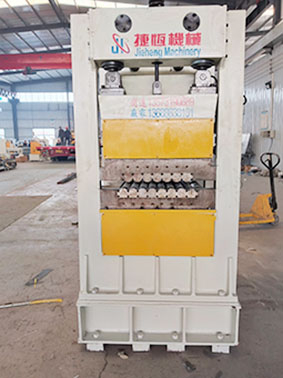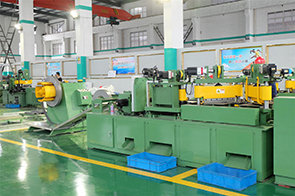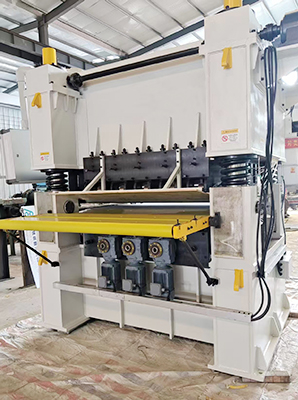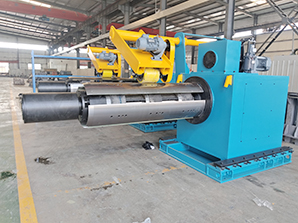

Decoiler
Uncoiler equipment holds significant advantages in modern industrial production, especially in fields such as metal processing and sheet metal production lines. Below are the main advantages of uncoiler equipment:
1. High Efficiency and Automation
Automated Operation: Modern uncoilers are typically equipped with automatic loading, centering, and unloading functions, reducing manual intervention and improving production efficiency.
Continuous Production: Seamless integration with subsequent equipment (such as leveling machines and shearing machines) enables continuous production lines, enhancing overall output.
2. High-Precision Control
Tension Control: Precise tension control systems ensure stable unwinding of coils, preventing material deformation or damage.
Centering Accuracy: Automatic centering ensures the coil is always in the correct position during unwinding, reducing material waste.
3. Strong Adaptability
Multi-Specification Compatibility: Capable of handling coils of different widths, thicknesses, and weights, meeting diverse production needs.
Material Diversity: Suitable for unwinding various materials, including metals (such as steel and aluminum), plastics, and paper.
4. Labor Cost Savings
Reduced Manual Operation: Automation minimizes the need for manual labor, lowering labor costs.
User-Friendly Operation: The equipment is designed with a user-friendly interface, reducing the technical requirements for operators.
5. Improved Product Quality
Reduced Material Damage: Precise tension control and stable unwinding processes minimize material damage during processing.
High Consistency: Automated systems ensure consistent unwinding quality, improving product yield.
6. Space Efficiency
Compact Design: Modern uncoilers feature a compact design, occupying less space and fitting well in limited production environments.
High Integration: Can be integrated with leveling machines, shearing machines, and other equipment, reducing the overall footprint.
7. Energy Efficiency and Environmental Friendliness
Low Energy Consumption: Efficient drive systems and energy-saving designs reduce the equipment’s energy usage.
Waste Reduction: Precise control systems minimize material waste, aligning with environmental standards.
8. High Safety
Safety Features: Equipped with multiple safety protections (such as emergency stop buttons and protective covers) to ensure operator safety.
Fault Diagnosis: Features automatic fault diagnosis to promptly identify and address issues, reducing downtime.
9. Easy Maintenance
Modular Design: The equipment adopts a modular design, facilitating maintenance and part replacement.
Long Lifespan: Made with high-quality materials and advanced manufacturing techniques, ensuring a long service life.
10. Flexible Configuration
Customization Services: Can be customized in specifications and functions to meet specific production requirements.
Strong Expandability: Additional functional modules, such as automatic loading and cutting, can be added based on production needs.
In summary, uncoiler equipment, with its characteristics of high efficiency, precision, flexibility, and energy efficiency, plays a crucial role in modern industrial production. It helps enterprises improve production efficiency, reduce costs, and enhance product quality.
Product Details of Uncoiler Equipment
The uncoiler is an industrial device used for unwinding coiled materials (such as metal coils, plastic coils, etc.), widely applied in fields such as metal processing, sheet metal production lines, and stamping equipment. Below are the product details of uncoiler equipment:
1. Product Overview
The uncoiler is primarily used to unwind coiled materials and feed them into subsequent processing equipment (such as leveling machines and shearing machines). It is a key component in continuous production lines. Its efficiency, precision, and automation make it an indispensable device in modern industrial production.
2. Product Models and Specifications
Uncoiler equipment can be provided in various models and specifications based on customer needs. Common classifications include:
By Function: Manual uncoilers, semi-automatic uncoilers, fully automatic uncoilers.
By Load Capacity: Light-duty uncoilers, medium-duty uncoilers, heavy-duty uncoilers.
By Material Type: Metal uncoilers, plastic uncoilers, paper uncoilers.
Typical Technical Parameters:
Coil Width: 500mm - 2500mm
Coil Thickness: 0.2mm - 6mm
Coil Weight: 1 ton - 20 tons
Uncoiling Speed: 10m/min - 60m/min
Drive Method: Electric drive, hydraulic drive
3. Main Structure and Components
The core structure of the uncoiler includes the following parts:
Uncoiler Head: Used to support and fix the coil, typically equipped with an adjustable mandrel.
Tension Control System: Ensures stable tension during the unwinding process to prevent material deformation.
Centering Device: Automatically or manually adjusts the coil position to ensure centered unwinding.
Pressure Roller: Presses the coil to prevent loosening or deviation.
Drive System: Provides power to drive the unwinding process.
Control System: PLC or CNC system for automated operation and monitoring.
4. Product Features
High Efficiency and Automation: Equipped with automatic loading, centering, and unloading functions to reduce manual intervention.
High-Precision Control: Precise tension control and automatic centering ensure high-quality material unwinding.
Strong Adaptability: Capable of handling coils of different widths, thicknesses, and weights, suitable for various materials.
Energy Efficiency and Environmental Friendliness: Low-energy design reduces material waste.
High Safety: Equipped with multiple safety protections to ensure operator safety.
Easy Maintenance: Modular design facilitates maintenance and part replacement.
5. Application Fields
Uncoilers are widely used in the following industries:
Metal Processing: Unwinding of metal coils such as steel, aluminum, and copper.
Automotive Manufacturing: Used for processing body panels and components.
Home Appliance Manufacturing: Used for producing appliance housings and components.
Packaging Industry: Used for unwinding and processing packaging materials.
Construction Industry: Used for producing construction panels.
6. Supporting Equipment
Uncoilers are often used in conjunction with the following equipment to form a complete production line:
Leveling Machine: Used to correct the flatness of the coil.
Shearing Machine: Used to cut the unwound coil into desired lengths.
Feeding Machine: Used to transport materials to subsequent processing equipment.
Rewinding Machine: Used to rewind processed materials.
7. Selection Recommendations
When selecting an uncoiler, consider the following factors:
Coil Specifications: Width, thickness, weight, etc.
Production Requirements: Capacity, precision, automation level, etc.
Material Type: Metal, plastic, paper, etc.
Space Constraints: Equipment size and footprint.
Budget: Equipment price and long-term maintenance costs.
8. After-Sales Service
Installation and Debugging: Professional installation and debugging services to ensure proper operation.
Technical Training: Detailed technical training for operators.
Maintenance and Upkeep: Regular maintenance services to extend equipment lifespan.
Spare Parts Supply: Genuine spare parts to ensure long-term stable operation.
9. Product Advantages Summary
Improves Production Efficiency: Automation and continuous production significantly enhance output.
Reduces Production Costs: Minimizes labor and material waste, optimizing production processes.
Enhances Product Quality: High-precision control ensures material unwinding quality.
Flexible to Meet Needs: Customizable specifications and functions based on customer requirements.
10. Contact Us
For more product details or customized solutions, please contact our sales team:
Email: jhjx@jnjieheng.com
Website: https://www.jnjieheng.com/
With its efficiency, precision, and flexibility, uncoiler equipment has become a core device in modern industrial production. We are committed to providing high-quality products and excellent services to help enterprises achieve production automation and efficiency improvement.