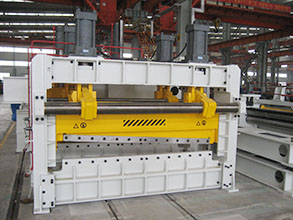
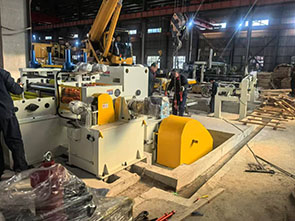
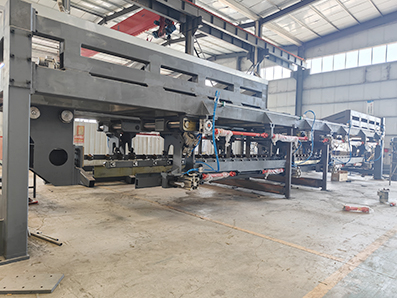
Palletizing Machine
Steel Plate Palletizing Equipment is a specialized automated device designed for the stacking and organizing of steel plates, widely used in industries such as steel manufacturing, warehousing and logistics, and metal processing. Below is a detailed introduction to steel plate palletizing equipment:
1. Equipment Overview
Definition: A steel plate palletizer is an automated device used to neatly stack steel plates onto pallets or designated locations according to preset specifications and stacking patterns.
Function: Automatically grabs, transports, and stacks steel plates, improving production efficiency, reducing manual labor, and ensuring the stability and safety of the stack.
2. Main Components
Robotic Arm/Gripping Device:
Utilizes vacuum suction cups, electromagnetic suction cups, or mechanical clamps to grip steel plates.
The gripping method is selected based on the size, weight, and surface characteristics of the steel plates.
Conveyor System:
Includes roller conveyors, chain conveyors, or belt conveyors to transport steel plates to the palletizing area.
Control System:
PLC (Programmable Logic Controller) or industrial computer to enable automated operation.
Supports multiple stacking modes and allows flexible parameter adjustments.
Positioning and Detection System:
Uses sensors, laser scanners, or vision systems to ensure precise positioning and stacking of steel plates.
Safety Protection Devices:
Includes emergency stop buttons, guardrails, light curtains, etc., to ensure operational safety.
3. Equipment Features
High Efficiency: Automated operation significantly improves palletizing efficiency and reduces labor costs.
Precision: High-precision positioning and stacking ensure neat and stable steel plate stacks.
Flexibility: Adapts to steel plates of different sizes, thicknesses, and weights, supporting multiple stacking modes.
Durability: Constructed with high-strength materials and anti-corrosion designs, suitable for harsh industrial environments.
Intelligence: Supports data collection, remote monitoring, and fault diagnosis, enabling intelligent management.
4. Application Scenarios
Steel Manufacturing Plants: Used for stacking and storing finished steel plates.
Metal Processing Plants: Used for organizing and stacking cut steel plates.
Warehousing and Logistics Centers: Used for automated storage and transportation of steel plates.
Automotive Manufacturing Industry: Used for automated handling and stacking of steel plate materials.
5. Technical Parameters (Example)
Applicable Steel Plate Size: Length 1000-6000mm, width 500-3000mm, thickness 0.5-50mm.
Stacking Height: Up to 2000mm.
Palletizing Speed: 10-30 cycles per minute (depending on steel plate size and weight).
Load Capacity: Single grip capacity of 500kg-5000kg.
Power Requirements: 380V/50Hz or customized based on customer needs.
6. Selection Recommendations
Based on Steel Plate Characteristics: Such as size, weight, and surface condition (smooth, rough, oily, etc.).
Based on Production Capacity Needs: Such as palletizing speed and stacking height.
Based on Site Conditions: Such as equipment size and installation space.
Based on Budget: Such as standard models or customized solutions.
7. Advantages and Value
Improves Production Efficiency: Automated operation reduces manual intervention and shortens production cycles.
Reduces Labor Intensity: Minimizes manual handling and lowers the risk of workplace injuries.
Enhances Product Quality: Ensures neat stacking of steel plates, reducing scratches and deformations.
Cost Savings: Long-term use reduces labor costs and material waste.
8. Common Brands and Suppliers
International Brands: ABB, KUKA, FANUC, Kawasaki.
Domestic Brands: Siasun Robotics, Estun, Guangzhou CNC, Huazhong CNC.
9. Maintenance and Care
Regularly inspect the robotic arm, gripping device, and conveyor system for operational status.
Clean the equipment surface to prevent dust and oil buildup.
Regularly lubricate moving parts to ensure smooth operation.
Replace worn parts promptly to avoid affecting equipment performance.
If you require more detailed technical information or customized solutions, it is recommended to contact professional equipment suppliers or manufacturers for selection and design based on specific needs.